
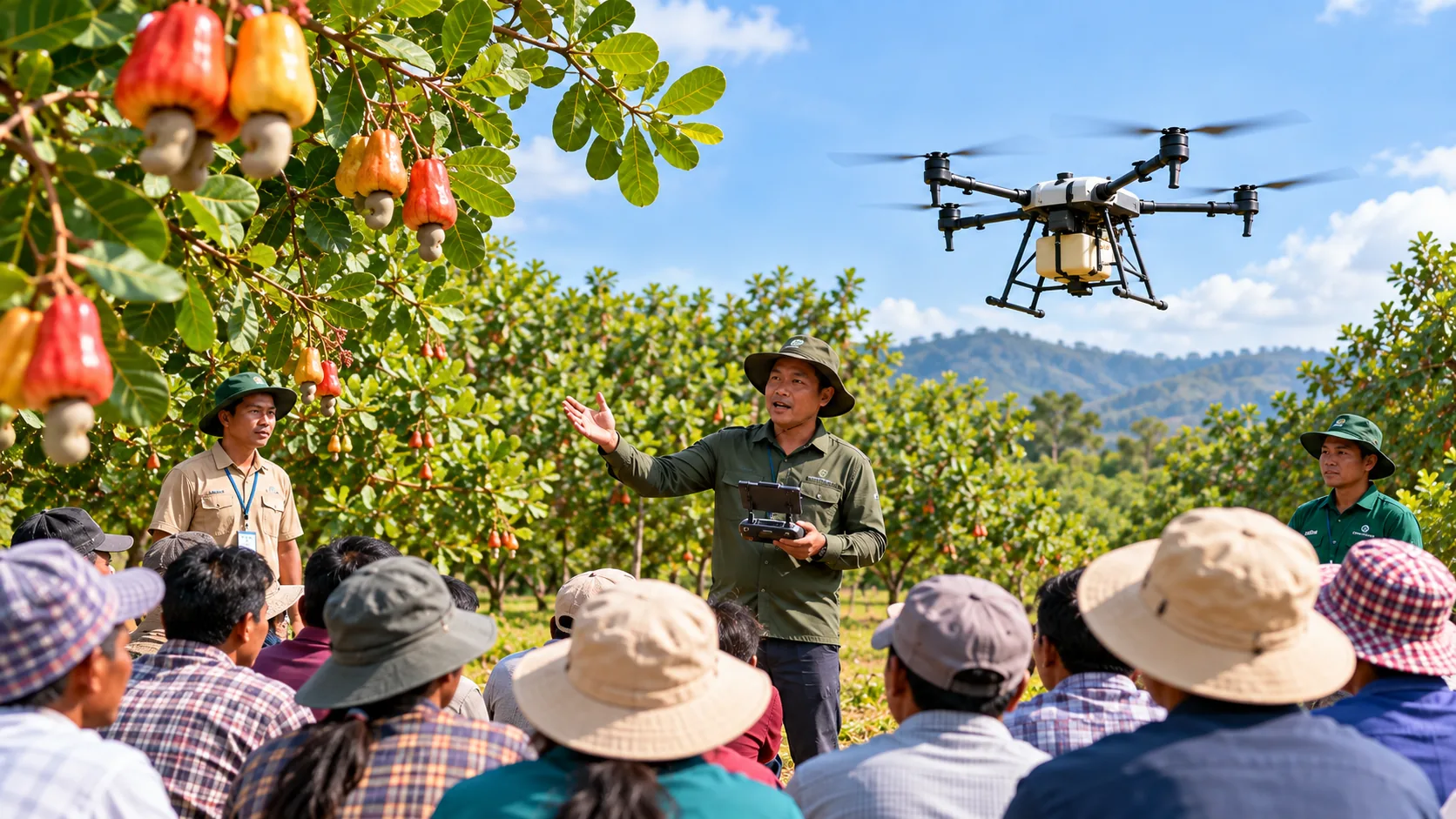
Cambodia’s cashew sector continues to strengthen its focus on modern farming practices as growers respond to changing weather conditions, production costs, and the need to improve farm productivity.
According to the Cashew Nut Association of Cambodia (CAC), a technical training session held in Kampong Thom on 25 September 2026 brought together 136 cashew farmers from nine provinces and municipalities. The training focused on modern agricultural practices, efficient use of farm inputs, and approaches intended to improve resilience to climate-related production risks.
Building More Resilient Cashew Farms
Weather conditions can influence cashew growth, flowering, fruit development, pest pressure, and farm productivity. Better farm management can therefore help growers respond more effectively to difficult production conditions.
CAC reported that the training covered practical topics including soil-moisture conservation and mulching, irrigation management, pest and disease monitoring, efficient use of agricultural inputs, fire prevention, and preparation for climate-related risks.
These practices can help farmers make better use of available resources while strengthening the management of their orchards.
Modern Technology in Cashew Farming
The training also introduced participants to modern agricultural technologies.
According to CAC, participants learned about agricultural drones and digital approaches to farm management. Practical demonstrations included drone operation and preparation of agricultural inputs for drone application.
Technology can support farm efficiency, but its effectiveness also depends on appropriate technical knowledge. Decisions about irrigation, fertilizers, crop-protection products, and pest management should be based on actual field conditions and suitable agricultural guidance.
Using Agricultural Inputs More Efficiently
Efficient input management is another important part of sustainable cashew production.
Using fertilizers, water, or crop-protection products without adequate planning can increase production costs without necessarily improving results. Better management involves using appropriate inputs at the appropriate time and according to crop and field conditions.
For farmers, this approach can contribute to more efficient production and better control of unnecessary expenses.
Quality Begins at the Farm
Cashew quality does not begin only when raw nuts reach a processing facility. The condition of the raw material is influenced by decisions made throughout cultivation, harvesting, and post-harvest handling.
The wider cashew journey can be viewed as:
Farm Management → Harvesting → Post-Harvest Handling → Drying → Storage → Processing → Kernel Grading → Quality Control → Packaging → Finished Product
This connection between farming and processing is important for Cambodia as the country continues developing its domestic cashew value chain.
For more background, explore Mato Cashew’s guides to the cashew tree, cashew processing, and cashew quality standards.
Strengthening Knowledge Across Cambodia’s Cashew Sector
CAC reported that the Kampong Thom session formed part of a broader farmer-training program planned across several Cambodian provinces.
Continued technical training and knowledge sharing can help farmers understand new production practices, evaluate agricultural technologies, and make better-informed farm-management decisions.
For Mato Cashew’s Knowledge Center, following developments from cultivation through processing helps build a clearer understanding of the complete Cambodian cashew value chain.
This article is an independently written educational summary based on information published by the Cashew Nut Association of Cambodia (CAC). Mato Cashew was not identified by the source as an organizer of the training. Please consult the original source for the complete report.