
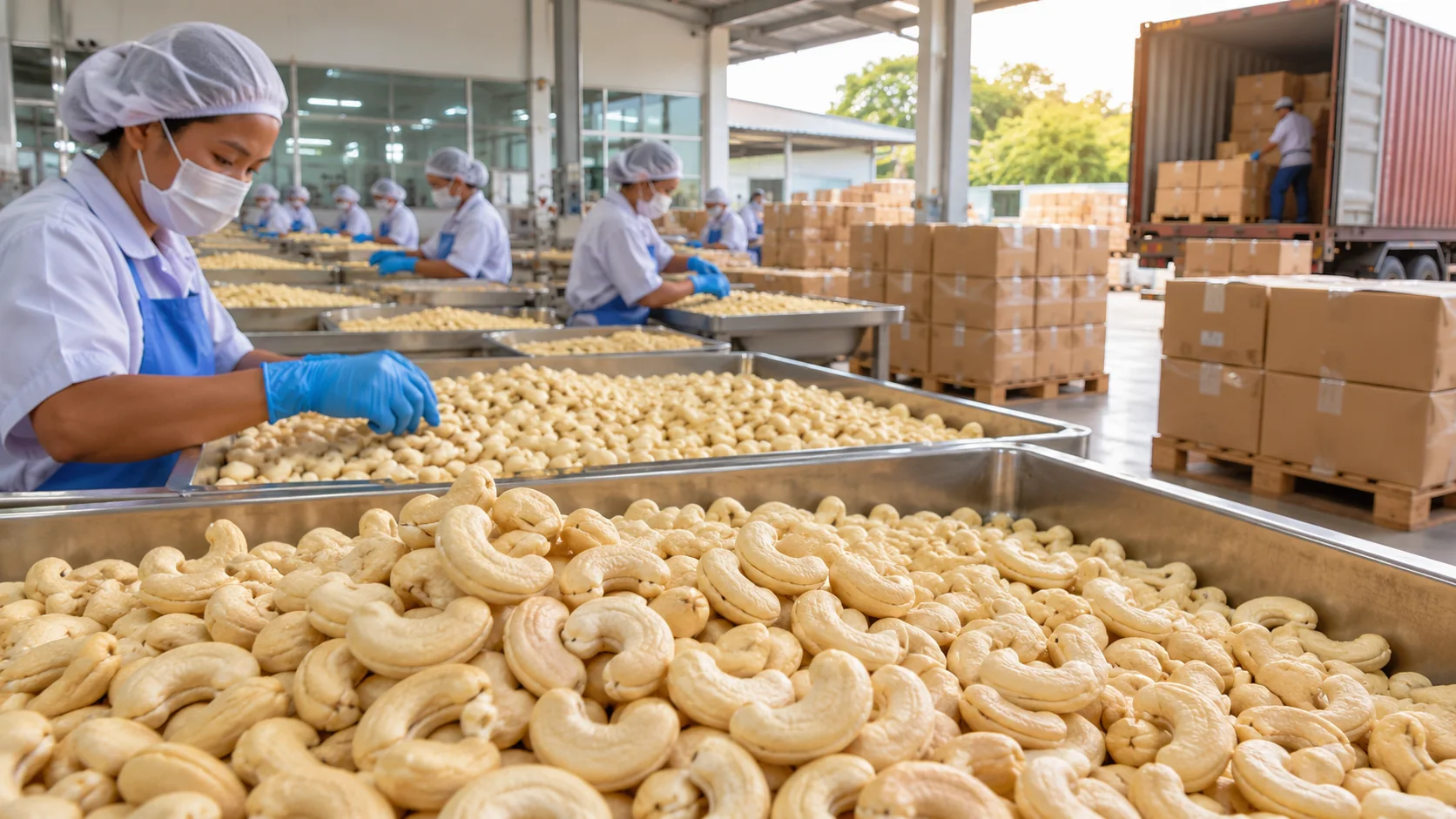
Cambodia’s exports of processed cashew nuts increased by 30% during the first eight months of 2026, reaching more than US$60 million, according to figures cited by Cambodia Cashew Federation President An Dara at the federation’s first general assembly on 7 October 2026. Fresh News reported the remarks on 8 October 2026.
The figures point to growing commercial activity in Cambodia’s domestic cashew-processing sector, even as the country continues to export substantial volumes of raw cashew nuts.
More Processing Enterprises
The same report stated that the number of cashew-processing enterprises had risen from more than 40 to more than 50, with four major companies establishing processing plants in Cambodia over the preceding three years. These figures suggest a broader industrial base for transforming locally grown raw cashew nuts into products ready for higher-value markets.
However, an increase in the number of enterprises does not by itself demonstrate higher operating capacity or profitability. Processing performance also depends on reliable raw-material supply, equipment, skilled workers, quality control, financing and buyer relationships.
Why Domestic Processing Matters
Processing raw cashew nuts in Cambodia can help retain more value locally through shelling, peeling, grading, quality inspection, packaging and export preparation. It can also create opportunities for jobs and related services.
Cambodia remains a major producer and exporter of raw cashew nuts. The Cashew Nut Association of Cambodia (CAC) has repeatedly highlighted the need for more investment in local processing and storage infrastructure to reduce dependence on raw-nut exports.
Opportunities and Challenges Ahead
Rising processed exports may encourage processors to invest in production technology, food-safety systems, traceability and long-term market relationships. But scaling up requires consistent kernel quality, dependable volumes, working capital and the ability to meet destination-market standards.
It is also important to distinguish processed cashew exports from raw cashew nut exports. The reported 30% growth and more than US$60 million concern processed products during January–August 2026; they should not be confused with separate national figures for raw cashew exports or total cashew trade.
Mato Cashew Perspective
For Mato Cashew, the development underscores the potential of domestic processing and value addition. Strong post-harvest handling, accurate grading, hygienic processing and reliable packaging are essential foundations for building confidence in Cambodian cashew products.
Sustainable progress will depend on cooperation among growers, cooperatives, processors, exporters and public-sector partners—not only on increasing export values, but also on improving the competitiveness of the supply chain.
Sources: Fresh News, Cambodia Cashew Exports Surge 120% to $1.17B in Nine Months (8 October 2026); Cashew Nut Association of Cambodia, Desperate Need for Cashew Processing Investment as Raw Exports Pass One Million Tonnes (23 July 2026).
Editorial note: The 30% growth rate, export value and enterprise counts are attributed to the federation president as reported by Fresh News; they have not been independently verified against official customs data. This independent Mato Cashew summary includes general industry analysis. The accompanying AI-generated illustration is conceptual and does not depict a specific Cambodian factory, shipment or company.