
Export earnings rise despite lower shipment volumes
Vietnam exported approximately 543,400 tonnes of cashew nuts worth US$3.85 billion in the first nine months of 2026, according to figures reported by Vietnam News Agency and published by VietnamPlus on 2 October 2026. Compared with the same period in 2025, export volume decreased by 2%, while export value increased by 2%. The reported average export price rose 4.2%, reaching approximately US$7,084.4 per tonne.
The figures suggest that higher average export prices helped offset the decline in shipped volume. They do not, on their own, establish that processing companies earned higher profits, since raw-material, labor and logistics costs also affect margins.
Major destination markets
China, the United States and the Netherlands were identified as Vietnam’s three largest cashew export markets during the period. These markets matter for processors and traders assessing quality requirements, buyer demand and export opportunities.
Cambodia’s role in raw cashew supply
Vietnam’s processing sector depends substantially on imported raw cashew nuts. A separate 8 October 2026 market report from Quang Vinh, citing Vietnam Customs statistics, estimated that Vietnam imported approximately 2.362 million tonnes of raw cashew nuts in January–September 2026, including around 1.05 million tonnes from Cambodia, or approximately 44% of the reported raw-nut import volume.
These raw cashew import figures must not be confused with Vietnam’s 543,400-tonne cashew export figure, which relates to export products rather than the same physical stage of the supply chain. The two sets of numbers have different coverage and are not directly comparable.
What this means for Cambodian stakeholders
Vietnam’s export performance is relevant to Cambodian farmers, collectors and processors because demand from Vietnamese factories can influence the market for Cambodian raw nuts. Higher export prices may create opportunities, but they do not automatically translate into higher farm-gate prices.
For Cambodia, the developments reinforce the importance of consistent drying, moisture control, grading, transparent trading information and investment in domestic processing. These measures can help improve quality and strengthen value addition over time.
Sources and editorial note
- VietnamPlus / Vietnam News Agency, 2 October 2026 — export volume, value, price changes and destination markets.
- Quang Vinh Cashew Market Report, 8 October 2026 — industry estimates of raw cashew imports and Cambodian supply.
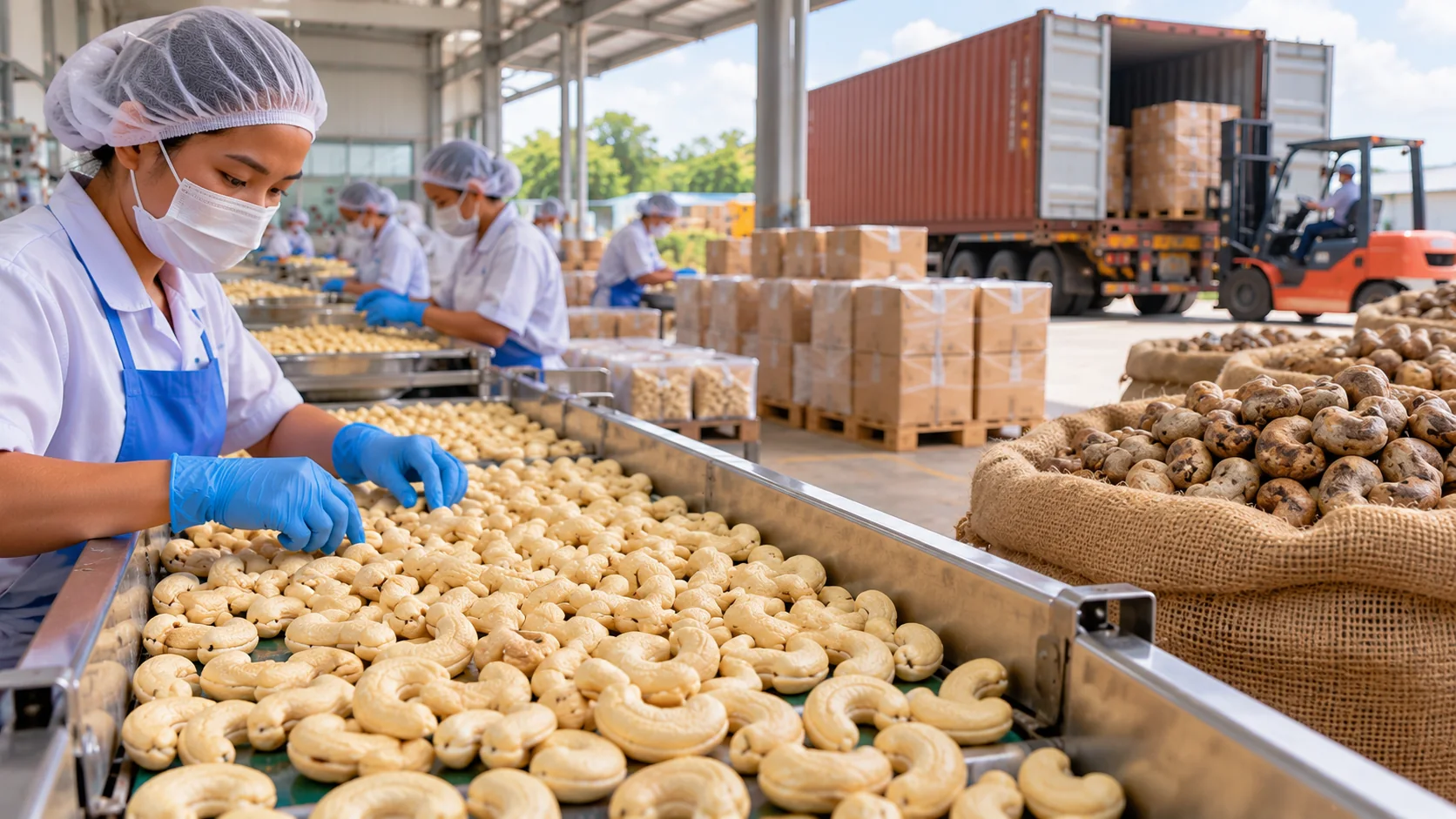
Editorial note: The hero image is AI-generated and illustrative; it does not depict a specific factory or shipment. Raw-material import estimates are attributed to the market report and have not been independently audited by Mato Cashew.