
Industry and international trade | Source report: 31 October 2026 | Mato Cashew publication: 1 November 2026
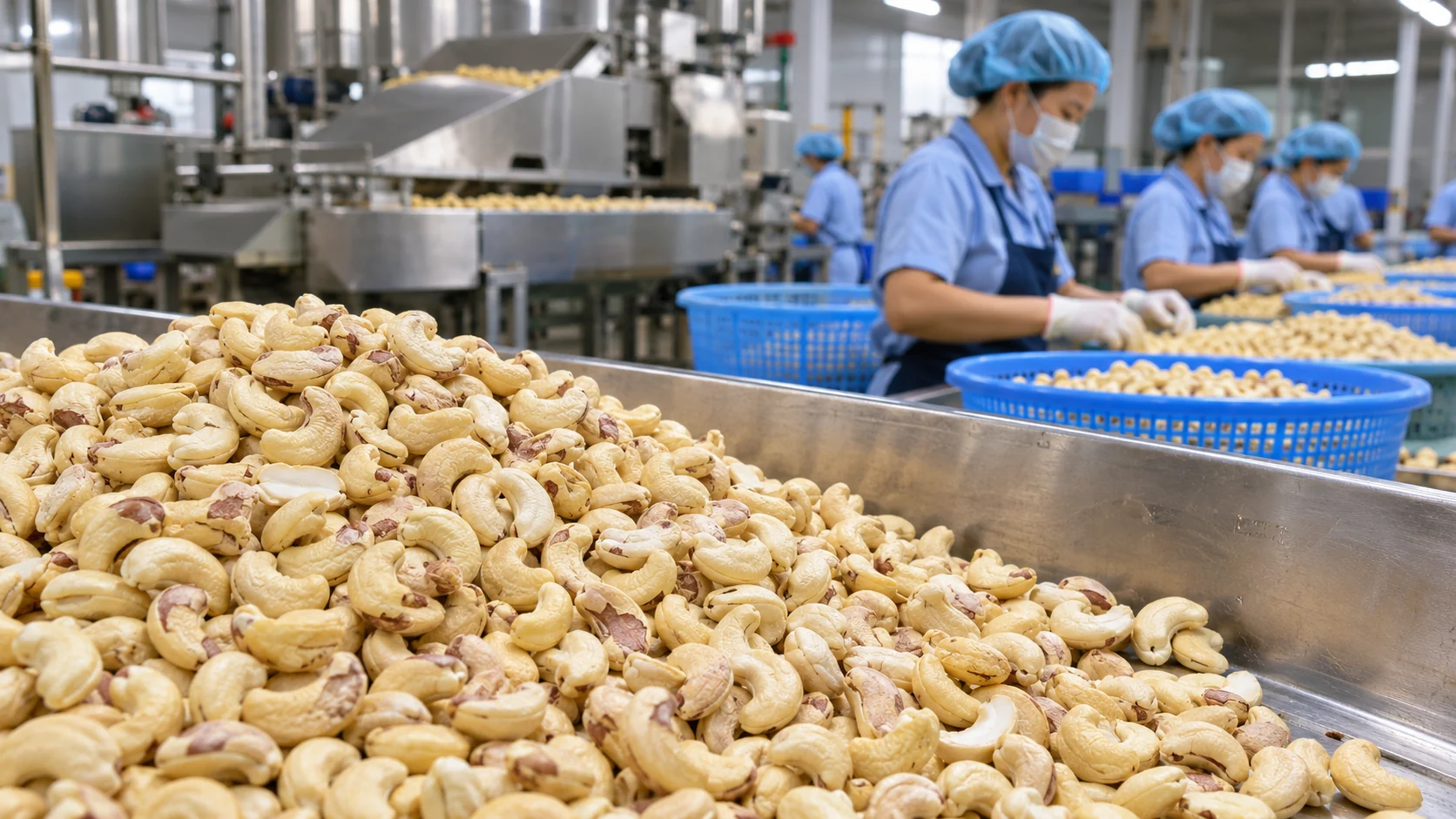
Vietnam’s cashew industry is seeing a notable change in the products it imports for processing. According to figures attributed to the Vietnam Cashew Association (VINACAS) in reporting published on 31 October 2026, Vietnam imported approximately 119,143 tonnes of certain semi-processed cashew kernels, worth more than US$759 million, during the first nine months of 2026.
The reported import volume rose 41.02% year on year, while the import value increased 35.94%. These products include kernels retaining their thin skin (testa) or some residual testa. They should not be confused with raw cashew nuts still in their hard outer shells.
A different pace of growth for raw nuts
Over the same nine-month period, Vietnam reportedly imported nearly 2.775 million tonnes of raw cashew nuts, up 8.18% by volume from the corresponding period a year earlier. The different growth rates suggest that semi-processed material is becoming more significant in Vietnam’s import mix, although the figures alone do not establish why every buyer changed sourcing practices.
Producing countries seek more value at origin
Some cashew-producing countries, particularly in Africa, are investing in processing rather than exporting only raw nuts. Processing at origin may create employment and retain more value locally, while presenting Vietnamese factories with new supply options and competitive pressures.
Vietnam remains an important global cashew-processing hub. Its future competitiveness may increasingly depend on processing efficiency, product standards, traceability and access to higher-value customers.
What the development could mean for Cambodia
Cambodia is an important supplier of raw cashew nuts to Vietnam. As processing models evolve, Cambodian producers and businesses may find opportunities in improved drying, quality grading, primary processing and stronger direct relationships with international buyers.
Representatives of the Cambodia Cashew Federation have discussed targets to expand domestic processing to 25% by 2027 and 50% by 2032. These are stated targets, not achieved processing rates. Meeting them would require suitable financing, machinery, technical skills, reliable electricity, quality systems and market access.
The Vietnamese import figures do not identify how much of the semi-processed volume came from Cambodia. They should therefore not be treated as evidence of a specific increase in Cambodia’s semi-processed exports.
Outlook
The rise in semi-processed kernel imports is one indicator of an evolving cashew supply chain. For Cambodia, the practical priority is to build commercially viable processing capacity while protecting quality, managing costs and developing dependable export markets.
Sources: Dân trí (31 October 2026), citing VINACAS figures; VnEconomy (31 October 2026), on changes in the global cashew value chain.