Cashew Food Safety
Food safety is one of the most important aspects of modern cashew processing. It ensures that cashew kernels are safe to consume, meet international buyer expectations, and comply with food regulations in global markets.
From harvesting and processing to packaging and export, every stage of the supply chain requires careful hygiene and quality control. Even premium-quality kernels can lose their market value if food safety practices are not properly maintained.
Understanding food safety helps processors, exporters, and consumers protect product quality while building confidence in Cambodian cashew products.
- ✓Food safety protects both consumers and product quality.
- ✓Hygienic processing reduces contamination risks.
- ✓Good Manufacturing Practices (GMP) support consistent production.
- ✓HACCP helps identify and control food safety hazards.
- ✓Food safety is essential for international export markets.
What Is Food Safety?
Food safety refers to the practices and systems used to prevent contamination and ensure that food products remain safe for consumption. In the cashew industry, food safety begins with raw material handling and continues through processing, packaging, storage, and transportation.
Effective food safety management combines hygienic facilities, trained workers, proper equipment maintenance, and continuous quality monitoring.
Common Food Safety Hazards
Food safety hazards are potential sources of contamination that can affect the safety and quality of cashew kernels. International food safety systems classify hazards into three main categories: biological, chemical, and physical hazards.
Understanding these hazards helps processors implement effective preventive measures throughout the production process.
| Hazard Type | Examples | Possible Impact |
|---|---|---|
| Biological | Bacteria, mold, yeast | Foodborne illness and spoilage |
| Chemical | Cleaning chemicals, pesticides, lubricants | Chemical contamination |
| Physical | Shell fragments, metal, stones, plastic | Consumer injury and product rejection |
Food Safety Risk
Even a small amount of contamination can cause an entire production batch to be rejected by buyers or regulatory authorities.
Biological Hazards
Biological hazards include microorganisms such as bacteria, molds, and yeasts that may contaminate cashew kernels during harvesting, processing, storage, or transportation.
Proper drying, hygienic handling, and appropriate storage conditions significantly reduce biological risks.
Chemical Hazards
Chemical hazards may originate from pesticide residues, cleaning agents, machine lubricants, or other chemicals that accidentally contact food products.
Proper chemical management and equipment maintenance help prevent contamination.
Physical Hazards
Physical hazards include foreign objects such as shell fragments, stones, glass, plastic, or metal pieces.
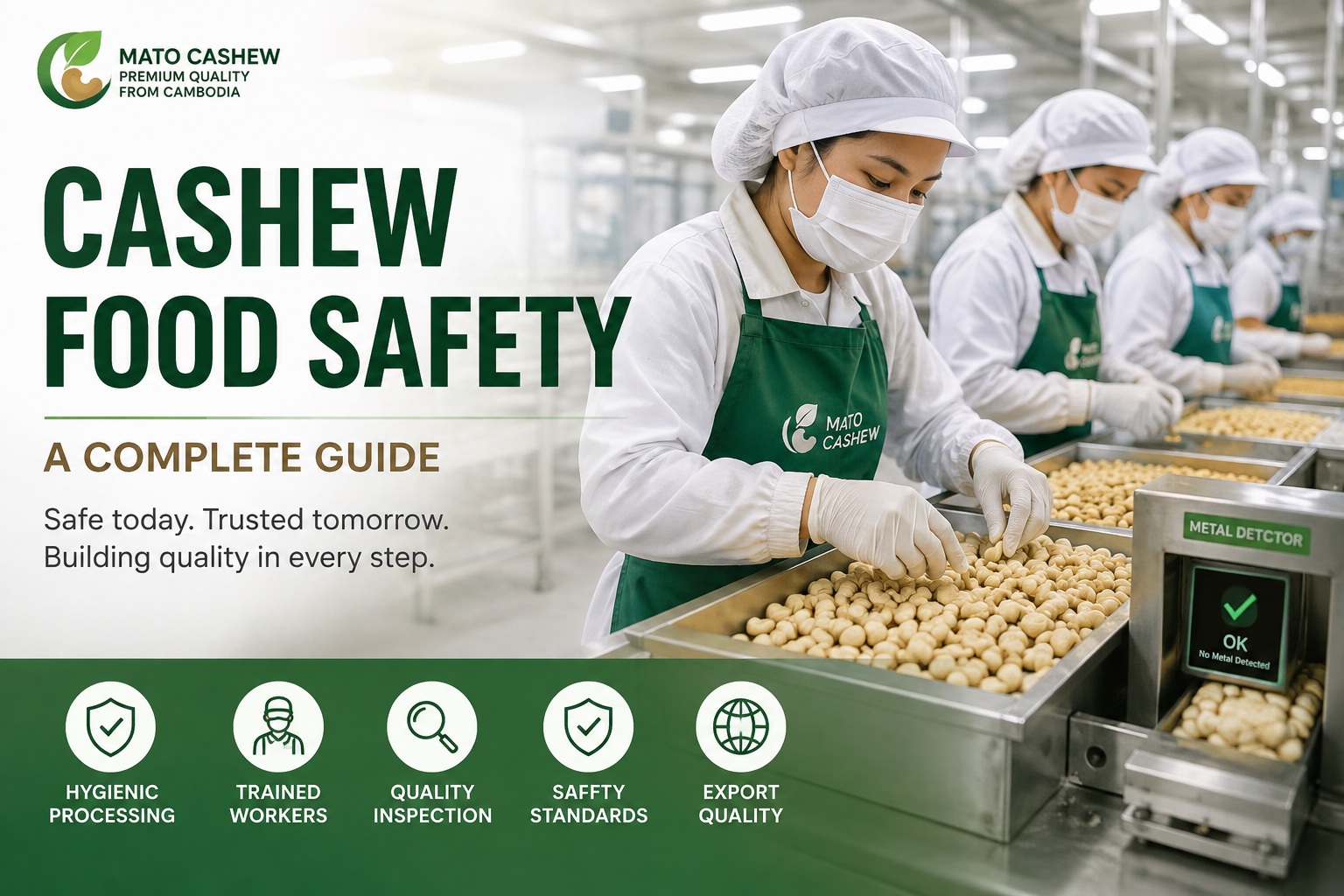
Modern processing facilities use inspection systems and metal detectors to minimize these risks.
Food Safety Controls
Preventing contamination is more effective than correcting problems after they occur. Modern cashew processing facilities implement multiple food safety controls throughout production to ensure products remain safe, consistent, and suitable for international markets.
These controls combine good facility management, trained employees, hygienic equipment, and systematic monitoring.
Prevention First
Food safety systems focus on preventing contamination rather than detecting problems after production has finished.
Good Manufacturing Practices (GMP)
Good Manufacturing Practices (GMP) establish the basic operational conditions required to produce safe food consistently.
Examples include:
- Clean production facilities
- Sanitized equipment
- Proper maintenance
- Pest control
- Employee hygiene
- Controlled processing environment
GMP provides the foundation upon which more advanced food safety systems are built.
Hazard Analysis and Critical Control Points (HACCP)
HACCP is a preventive food safety management system that identifies potential hazards and establishes controls before they become risks.
Rather than relying only on final product inspection, HACCP continuously monitors critical stages throughout production.
| Principle | Purpose |
|---|---|
| Hazard Analysis | Identify possible food safety hazards |
| Critical Control Points | Determine where hazards can be controlled |
| Monitoring | Verify critical controls remain effective |
| Corrective Actions | Respond immediately when limits are exceeded |
Personal Hygiene
Employees play an important role in maintaining food safety.
Good hygiene practices include:
- Washing hands regularly
- Wearing clean uniforms
- Using gloves appropriately
- Wearing hair nets and masks
- Reporting illness before handling food
Cross-Contamination Prevention
Cross-contamination occurs when contaminants are unintentionally transferred from one surface, product, or person to another.
Processors reduce this risk by:
- Separating raw and finished products
- Cleaning equipment between production stages
- Using dedicated tools
- Following sanitation procedures
Packaging and Storage Hygiene
Food safety does not end when processing is complete. Proper packaging and storage practices help preserve product quality and prevent contamination before the products reach consumers.
Packaging materials should be clean, food-grade, and suitable for protecting cashew kernels from moisture, dust, insects, and physical damage during transportation and storage.
Storage areas should remain dry, well ventilated, clean, and protected from pests to maintain product safety throughout the supply chain.
Safe Packaging
Using clean, food-grade packaging materials and maintaining proper storage conditions significantly extend product shelf life while protecting food safety.
Quality Inspection Process
Food safety inspections should be performed throughout the production process rather than only at the final stage.
Typical inspection activities include:
- Raw material inspection
- Processing line monitoring
- Personal hygiene checks
- Equipment sanitation verification
- Metal detection
- Packaging inspection
- Finished product evaluation
- ✓Inspection should occur throughout production.
- ✓Equipment sanitation must be verified regularly.
- ✓Metal detection helps eliminate physical hazards.
- ✓Packaging inspection protects finished products.
- ✓Documentation supports product traceability.
Cambodia Perspective
Cambodia has become one of the world’s leading producers of raw cashew nuts, and the country’s processing industry continues to expand rapidly.
As more Cambodian processors target international markets, implementing recognized food safety practices has become increasingly important. Strong hygiene systems, employee training, and internationally accepted food safety management practices help improve buyer confidence and strengthen Cambodia’s reputation as a reliable supplier of premium cashew products.
Continued investment in food safety also supports long-term industry growth and greater value addition within Cambodia.
Key Takeaways
- ✓Food safety protects consumers and product quality.
- ✓Biological, chemical, and physical hazards require different control measures.
- ✓Good Manufacturing Practices provide the foundation for safe processing.
- ✓HACCP helps identify and control food safety risks.
- ✓Proper packaging and storage preserve food safety after processing.
- ✓Food safety strengthens Cambodia's competitiveness in export markets.
Frequently Asked Questions
Why is food safety important in cashew processing?
Food safety protects consumers, reduces contamination risks, and helps processors meet international market requirements.
What are the three main food safety hazards?
Biological, chemical, and physical hazards.
What is HACCP?
HACCP is a preventive food safety management system that identifies and controls hazards throughout production.
How does GMP support food safety?
Good Manufacturing Practices establish the basic hygienic conditions necessary for safe food production.
Why is proper packaging important?
Proper packaging protects cashew kernels from contamination, moisture, pests, and physical damage during storage and transportation.