The Complete Guide to Cashew Processing
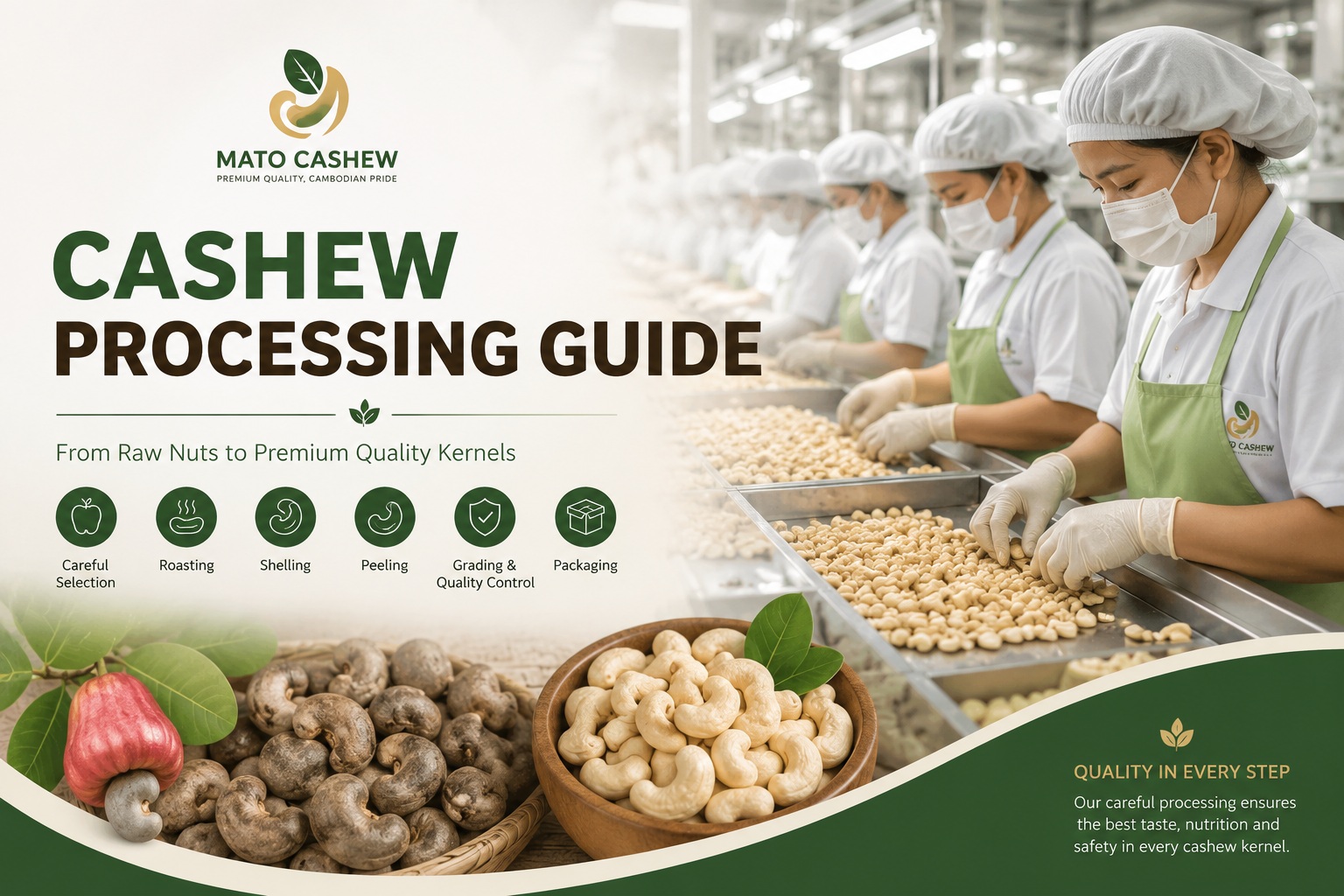
Cashew processing transforms raw cashew nuts into safe, premium-quality kernels ready for domestic consumption and international export. Every stage—from harvesting to final packaging—requires careful control to preserve quality, food safety, and kernel value.
🏭 Why Processing Matters
Professional processing protects kernel quality, improves food safety, and maximizes export value while reducing waste.
Processing Overview
| Stage | Purpose |
|---|---|
| Harvesting | Collect mature nuts |
| Drying | Reduce moisture |
| Storage | Preserve quality |
| Cleaning | Remove foreign materials |
| Steaming | Prepare shells |
| Shelling | Remove hard shell |
| Drying Kernels | Improve peeling |
| Peeling | Remove testa |
| Grading | Sort by size and quality |
| Quality Inspection | Verify export standards |
| Packaging | Maintain freshness |
| Export | Deliver to global buyers |
1. Harvesting
Only naturally fallen mature cashew apples are collected. The nut is separated from the apple and prepared for drying.
2. Drying
Raw nuts are sun-dried until safe moisture levels are reached for storage and processing.
☀️ Drying Tip
Uniform drying helps reduce mold risk and improves storage stability.
3. Storage
Nuts are stored in clean, dry, well-ventilated warehouses before processing.
4. Cleaning
Foreign materials, stones, dust, and damaged nuts are removed before thermal treatment.
5. Steaming
Steam softens the shell, making shell removal safer while reducing exposure to Cashew Nut Shell Liquid (CNSL).
⚠️ Safety
Raw shells contain CNSL, which can irritate skin. Proper equipment and protective measures are essential.
6. Shelling
Mechanical or manual shelling separates the kernel from the shell while minimizing breakage.
7. Kernel Drying
Shelled kernels are dried to loosen the testa (thin skin).
8. Peeling
Workers or specialized equipment remove the testa carefully to maintain whole kernels.
9. Kernel Grading
| Grade | Description |
|---|---|
| WW320 | Premium whole white kernels |
| WW450 | Smaller whole kernels |
| Splits | Naturally split kernels |
| Pieces | Broken kernel pieces |
Grading follows internationally recognized standards based on size, color, shape, and defects.
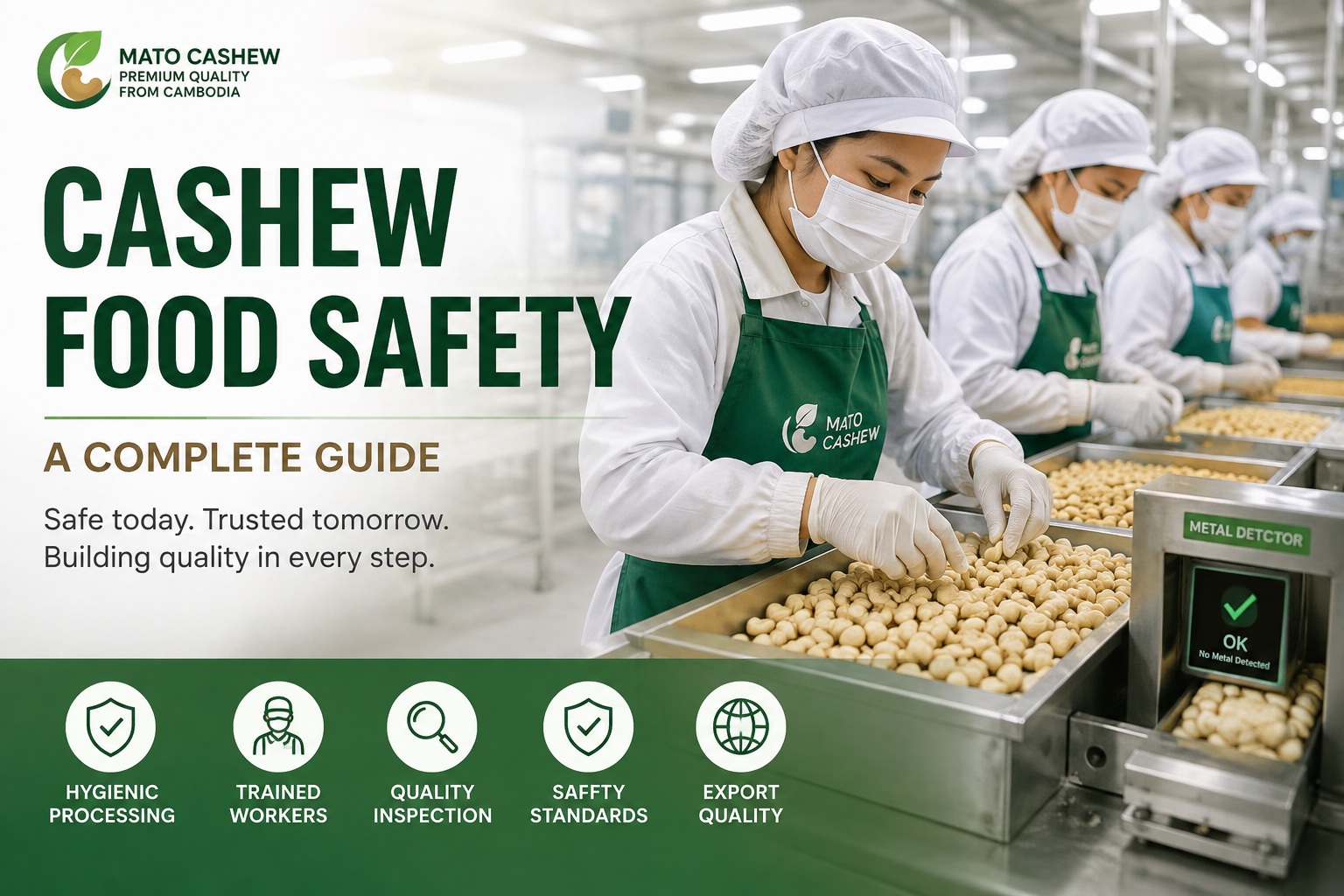
10. Quality Inspection
Quality inspectors verify:
- Moisture
- Color
- Size
- Defects
- Foreign matter
- Food safety
11. Packaging
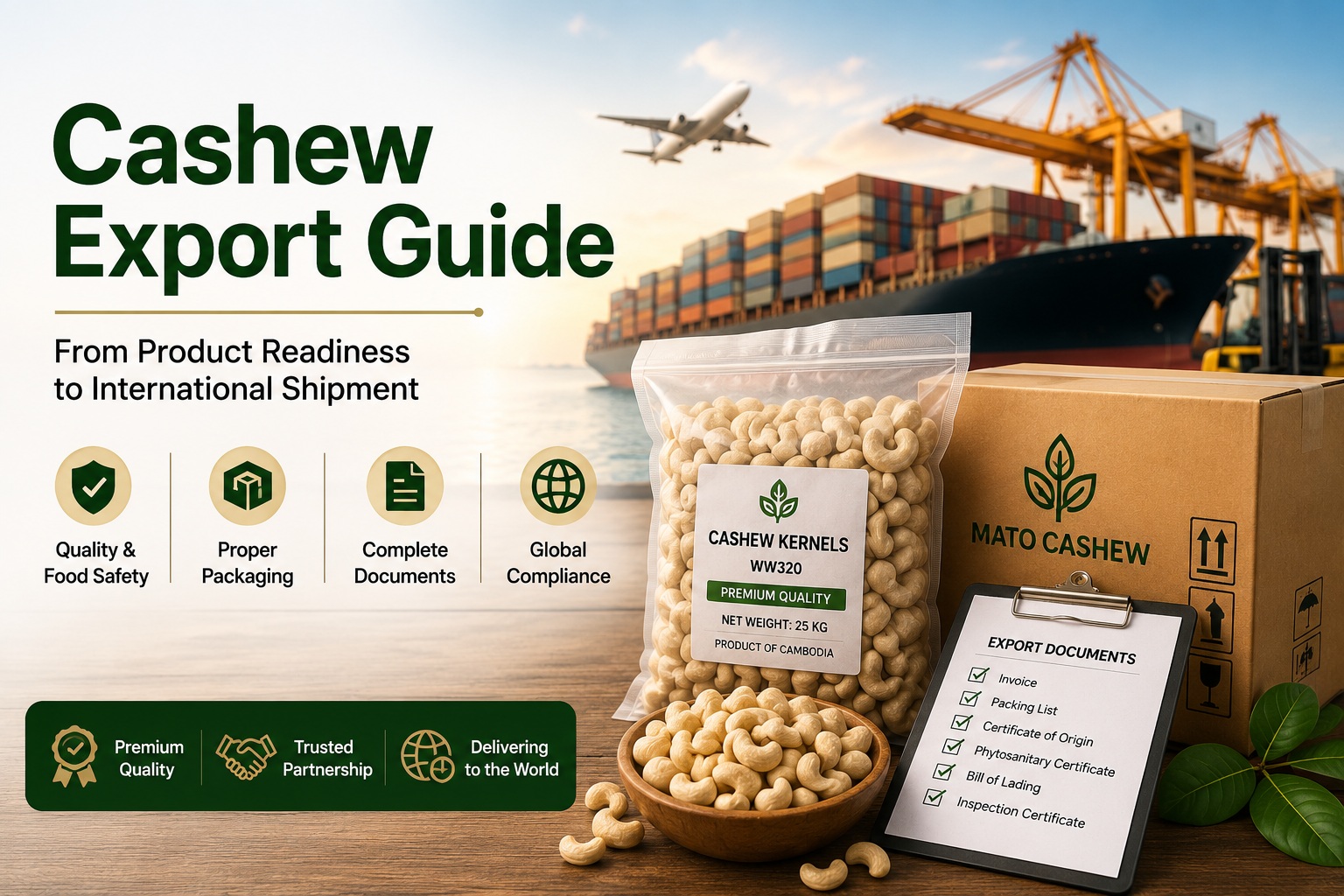
Vacuum packaging preserves freshness and extends shelf life during international transportation.
12. Cambodia Perspective
Cambodia is rapidly expanding domestic processing capacity to increase value-added exports and strengthen the local cashew industry.
🇰🇭 Cambodia Insight
Expanding local processing creates jobs, improves traceability, and increases export competitiveness.
Key Takeaways
- Cashew processing consists of multiple controlled stages.
- Food safety and quality control are essential throughout production.
- Proper grading increases export value.
- Modern packaging protects kernel quality.
- Domestic processing strengthens Cambodia’s agricultural economy.
Frequently Asked Questions
Why are raw cashews not eaten directly?
The shell contains CNSL, which must be safely removed during processing.
Why is grading important?
Grading determines commercial value and customer specifications.
Why is vacuum packaging used?
It helps preserve freshness and protects kernels during export.