Cashew Tree
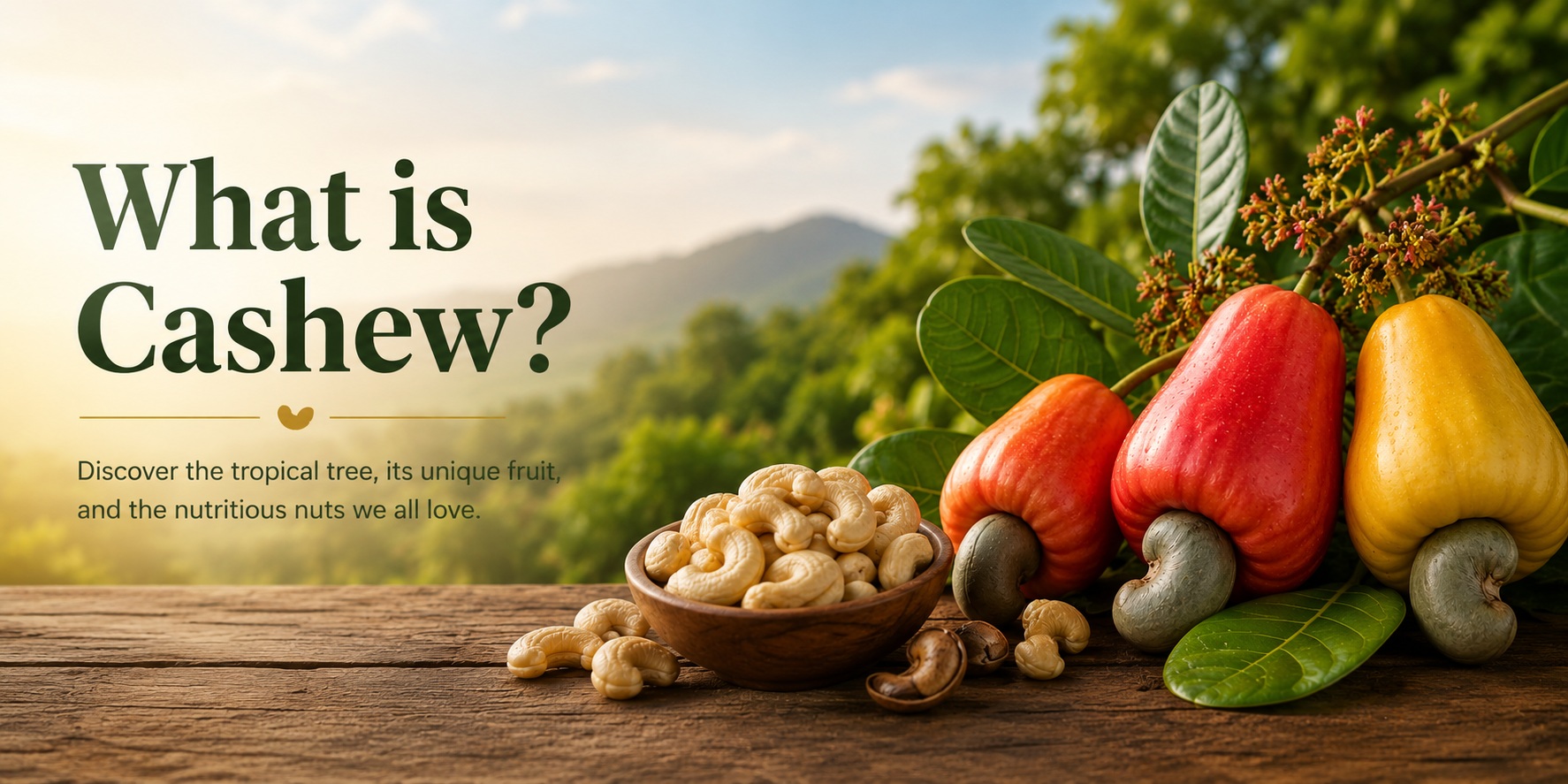
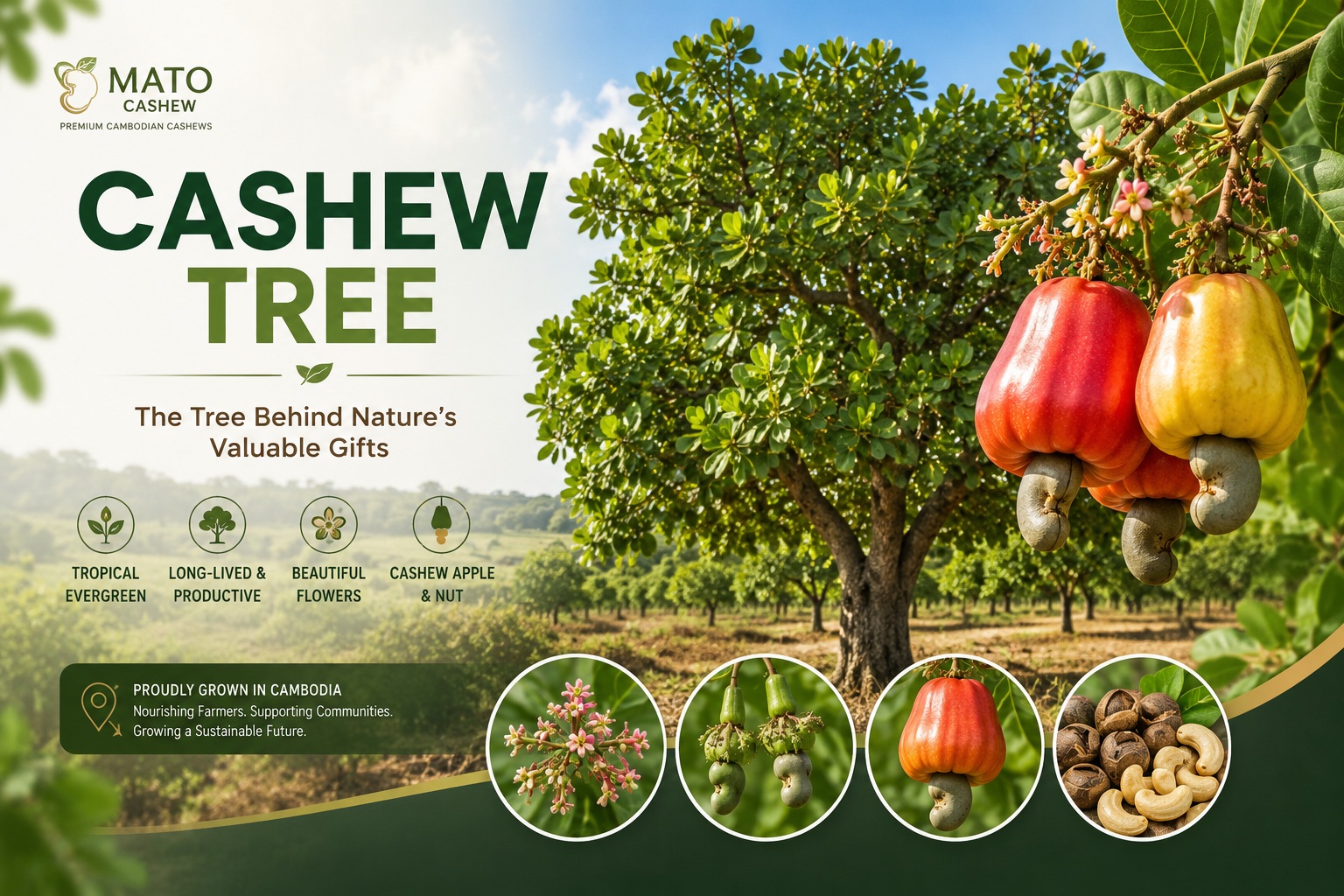
The cashew tree (Anacardium occidentale) is a tropical evergreen tree cultivated primarily for its valuable cashew kernels and the cashew apple. Native to northeastern Brazil, it has been introduced to many tropical regions around the world and is now widely grown in countries including Cambodia, Vietnam, India, Côte d’Ivoire, Nigeria, and Tanzania.
Known for its adaptability to warm climates and well-drained soils, the cashew tree plays an important role in both agriculture and the global food industry. Mature trees can produce high-quality raw cashew nuts for decades when managed properly, making them an important long-term crop for farmers.
Beyond its economic value, the cashew tree contributes to rural livelihoods, supports biodiversity, helps reduce soil erosion through its extensive root system, strengthens local processing industries, and creates opportunities for value-added exports. Understanding how the tree grows and develops helps farmers, processors, students, and consumers better appreciate the journey from orchard to premium cashew kernel.
🌳 Did You Know?
A healthy cashew tree can remain productive for several decades. With good orchard management, many trees continue producing commercially viable harvests well beyond 30 years.
Quick Facts
| Item | Information |
|---|---|
| Scientific Name | Anacardium occidentale |
| Plant Family | Anacardiaceae |
| Tree Type | Tropical evergreen tree |
| Native Region | Northeastern Brazil |
| Average Height | 6–12 meters (can grow taller under favorable conditions) |
| Product | Cashew apple and cashew kernel |
| Productive Lifespan | Commonly 30–40 years, often longer with proper care |
| Climate | Tropical and subtropical |
| Ideal Soil | Well-drained sandy or loamy soil |
| Propagation | Seed or grafting |
| Flowering | Seasonal, depending on local climate |
Scientific Classification
The cashew tree belongs to the Anacardiaceae family, which also includes economically important species such as the mango and pistachio. Understanding its scientific classification helps explain the similarities shared among these crops and provides a foundation for studying cashew botany.
| Classification | Details |
|---|---|
| Kingdom | Plantae |
| Clade | Angiosperms |
| Clade | Eudicots |
| Order | Sapindales |
| Family | Anacardiaceae |
| Genus | Anacardium |
| Species | Anacardium occidentale |
Tree Anatomy
Like all flowering plants, the cashew tree consists of several specialized parts that work together to support growth, reproduction, and fruit production. Each part performs a unique function that contributes to the tree’s health and productivity.
Root System
The root system anchors the tree firmly in the soil while absorbing water and essential nutrients. Mature cashew trees develop deep taproots together with extensive lateral roots, allowing them to tolerate seasonal dry conditions better than many other tropical crops.
🌱 Root Fact
A strong root system is one of the reasons why mature cashew trees can survive extended dry seasons better than many annual crops.
Trunk
The trunk supports the entire canopy and transports water and nutrients between the roots and the leaves. Mature trees usually develop a short but sturdy trunk covered with grayish-brown bark.
Bark
The bark of a mature cashew tree is thick, rough, and grayish-brown in color. It protects the tree from environmental stress, pests, and minor physical damage. Observing changes in the bark can also help farmers identify certain diseases or signs of poor tree health.
Branches and Canopy
Cashew trees naturally produce wide-spreading branches that form a broad canopy. A well-developed canopy increases sunlight interception, supports flower production, and helps maximize nut yield.
Leaves
Cashew leaves are thick, simple, oval-shaped, and evergreen. Their waxy surface helps reduce water loss while efficiently capturing sunlight for photosynthesis.
Flowers
Cashew trees produce small, fragrant flowers arranged in clusters called panicles. Individual trees bear both male flowers and bisexual flowers, allowing successful pollination and fruit development under suitable environmental conditions.
Fruit Development
After successful pollination, the tree develops two distinct structures:
- Cashew Apple – a swollen, juicy stalk that becomes colorful when mature.
- Cashew Nut – the true fruit that grows beneath the cashew apple and contains the edible kernel inside a hard shell.
💡 Botanical Note
Although many people refer to the cashew as a “nut,” the edible kernel is actually the seed found inside the true fruit attached beneath the cashew apple.
🇰🇭 Cambodia Insight
In Cambodia, healthy canopy development is particularly important because it helps protect developing flowers and fruits from excessive heat during the dry season. Proper pruning practices are commonly recommended to improve air circulation, sunlight penetration, and overall orchard productivity.
Growth Stages
The cashew tree develops through several distinct growth stages, from seed germination to full commercial production. Understanding these stages helps farmers manage orchards more effectively and plan long-term cultivation.
| Growth Stage | Description |
|---|---|
| Seedling | Young plants establish their root system and first leaves. |
| Juvenile | Rapid vegetative growth with expanding branches and canopy. |
| Early Fruiting | Trees begin producing flowers and small harvests, usually after 3–5 years depending on propagation method and growing conditions. |
| Mature Production | Trees produce stable commercial yields and can remain productive for decades with proper orchard management. |
🌱 Growing Tip
Grafted cashew trees generally begin producing earlier than trees grown directly from seed, making them a preferred choice for commercial orchards.
Climate Requirements
Cashew trees thrive in tropical climates with abundant sunshine, distinct wet and dry seasons, and warm temperatures throughout the year.
Ideal growing conditions include:
- Average temperatures between 24–28°C
- Annual rainfall of approximately 1,000–2,000 mm
- A well-defined dry season during flowering and fruit development
- Full sunlight throughout the day
Extended periods of frost or waterlogging can significantly reduce tree health and productivity. Cashew trees perform best in frost-free regions. Even short periods of freezing temperatures can damage young trees, reduce flowering, and affect long-term productivity.
Soil Requirements
Healthy cashew trees prefer well-drained sandy or loamy soils with moderate fertility. Good drainage is essential because standing water may damage the root system. Poor drainage increases the risk of root diseases and may limit oxygen availability, reducing the tree’s overall growth and productivity.
Important soil characteristics include:
- Good drainage
- Slightly acidic to neutral pH
- Moderate organic matter
- Deep soil profile for root development
🌍 Soil Insight
Although cashew trees tolerate relatively poor soils better than many fruit crops, proper soil preparation and nutrient management can substantially improve long-term yields.
Water Requirements
Young trees require regular watering during establishment. Once mature, cashew trees become relatively drought tolerant because of their extensive root systems.
🇰🇭 Cambodia Insight
However, prolonged drought during flowering and early fruit development may reduce yields. Supplemental irrigation, especially during extended dry periods, can improve productivity in commercial orchards where water resources are available. In Cambodia, young cashew orchards are often established at the beginning of the rainy season to help seedlings develop strong root systems before the following dry season. Proper water management during the first few years is essential for healthy tree establishment.
Flowering and Fruiting Cycle
The flowering and fruiting cycle is one of the most important stages in the life of a cashew tree because it directly determines the quantity and quality of the harvest. Flowering generally begins during the dry season, when environmental conditions are favorable for pollination and fruit development.
A mature cashew tree produces clusters of small flowers known as panicles. These clusters contain both male flowers and bisexual flowers. Successful pollination is mainly carried out by insects, particularly bees and other pollinating species.
After successful pollination, the fertilized flower gradually develops into two connected structures:
- The Cashew Apple – a swollen, fleshy stalk that becomes yellow, orange, or red when fully mature.
- The Cashew Nut – the true botanical fruit attached beneath the cashew apple, containing the edible kernel protected by a hard shell.
🐝 Pollination Insight
Healthy pollinator populations, especially bees, play an important role in improving fruit set and supporting higher cashew yields.
Economic Importance
The cashew tree is more than a fruit-producing crop—it is an important source of income for millions of farming households worldwide. Every part of the tree contributes economic value.
Major economic products include:
- Raw cashew nuts for processing
- Premium cashew kernels for domestic and international markets
- Cashew apples for beverages, jams, vinegar, and other food products
- Cashew nut shell liquid (CNSL), an industrial raw material used in resins, coatings, and friction materials
- Wood and biomass from old trees for local use
The increasing demand for healthy snacks and plant-based foods has strengthened the global market for cashew products, creating new opportunities for farmers, processors, exporters, and food manufacturers.
📈 Market Insight
Adding value through domestic processing often generates greater economic returns than exporting raw cashew nuts alone.
Cambodia Perspective
Cambodia has emerged as one of the world’s important producers of raw cashew nuts. In recent years, government agencies, private companies, development partners, and farmer organizations have increasingly promoted domestic processing to increase export value, create rural employment, and strengthen the country’s agricultural economy.
As processing capacity continues to expand, the cashew tree is expected to remain one of Cambodia’s most strategically important commercial crops.
Key Takeaways
- The cashew tree (Anacardium occidentale) is a tropical evergreen species valued for both its cashew kernels and cashew apples.
- It grows best in warm, frost-free climates with well-drained soils and abundant sunshine.
- A healthy tree can remain productive for several decades with proper orchard management.
- The tree’s root system, canopy, flowers, and fruits all play important roles in achieving high yields.
- Pollinating insects, especially bees, contribute significantly to successful fruit production.
- Cambodia is becoming an increasingly important producer and processor of cashew products, creating new opportunities for farmers and exporters.
How long does a cashew tree live?
A well-managed cashew tree commonly remains productive for 30–40 years and may continue producing for even longer under favorable conditions.
How long does it take for a cashew tree to produce fruit?
Grafted trees may begin producing fruit within 3–5 years, while trees grown from seed often require more time before reaching commercial production.
Can cashew trees grow in cold climates?
No. Cashew trees are tropical plants that perform best in warm, frost-free environments.
What is the difference between a cashew apple and a cashew nut?
The cashew apple is the swollen, fleshy stalk, while the cashew nut is the true botanical fruit attached beneath it. The edible cashew kernel is found inside the hard shell of the fruit.
Can cashew trees be grown from seed?
Yes. Cashew trees can be propagated from seed or by grafting. Commercial orchards often prefer grafted trees because they produce earlier and offer more consistent fruit quality.
Continue Learning
To better understand the cashew industry, you may also be interested in:
-
Cashew Apple (Coming Soon)
-
Cashew Kernel (Coming Soon)
-
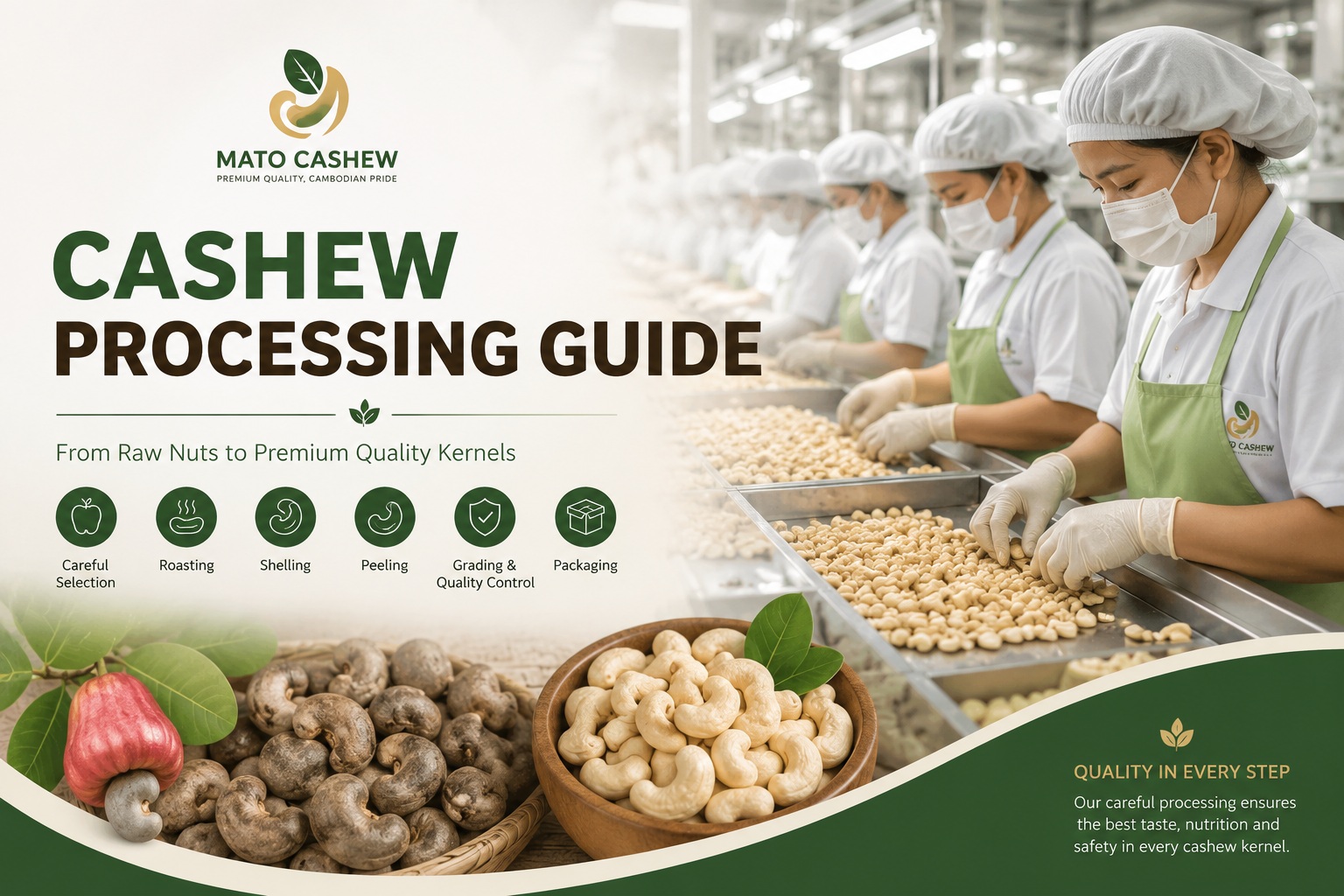
Cashew Processing Guide (Coming Soon)