Cashew Quality Standards
Cashew quality standards define the characteristics that premium kernels should meet before they are sold in domestic or international markets. These standards help ensure that buyers receive products that are safe, consistent, and suitable for their intended applications.
Unlike grading, which classifies kernels by size, shape, and color, quality standards evaluate the overall condition of the kernels after processing.
Quality vs. Grading
Grading identifies what a kernel looks like, while quality standards evaluate how well the kernel meets industry requirements.
A premium grade can still fail quality inspection if defects, contamination, or excessive moisture are present.
Quick Facts
- ✓Quality is different from grading.
- ✓Premium quality depends on multiple inspection criteria.
- ✓Moisture content directly affects shelf life.
- ✓Food safety is essential for export.
- ✓International buyers expect consistent quality standards.
Quality vs. Grading
Although the terms quality and grading are often used together, they represent different aspects of cashew evaluation.
| Quality | Grading |
|---|---|
| Evaluates overall product condition | Classifies kernels by size, color, and shape |
| Focuses on safety and consistency | Focuses on commercial classification |
| Includes moisture, cleanliness, and defects | Uses standardized grade codes such as WW320 |
| Determines market acceptance | Determines product category |
Both grading and quality inspection are essential before products are packaged or exported.
Main Quality Factors
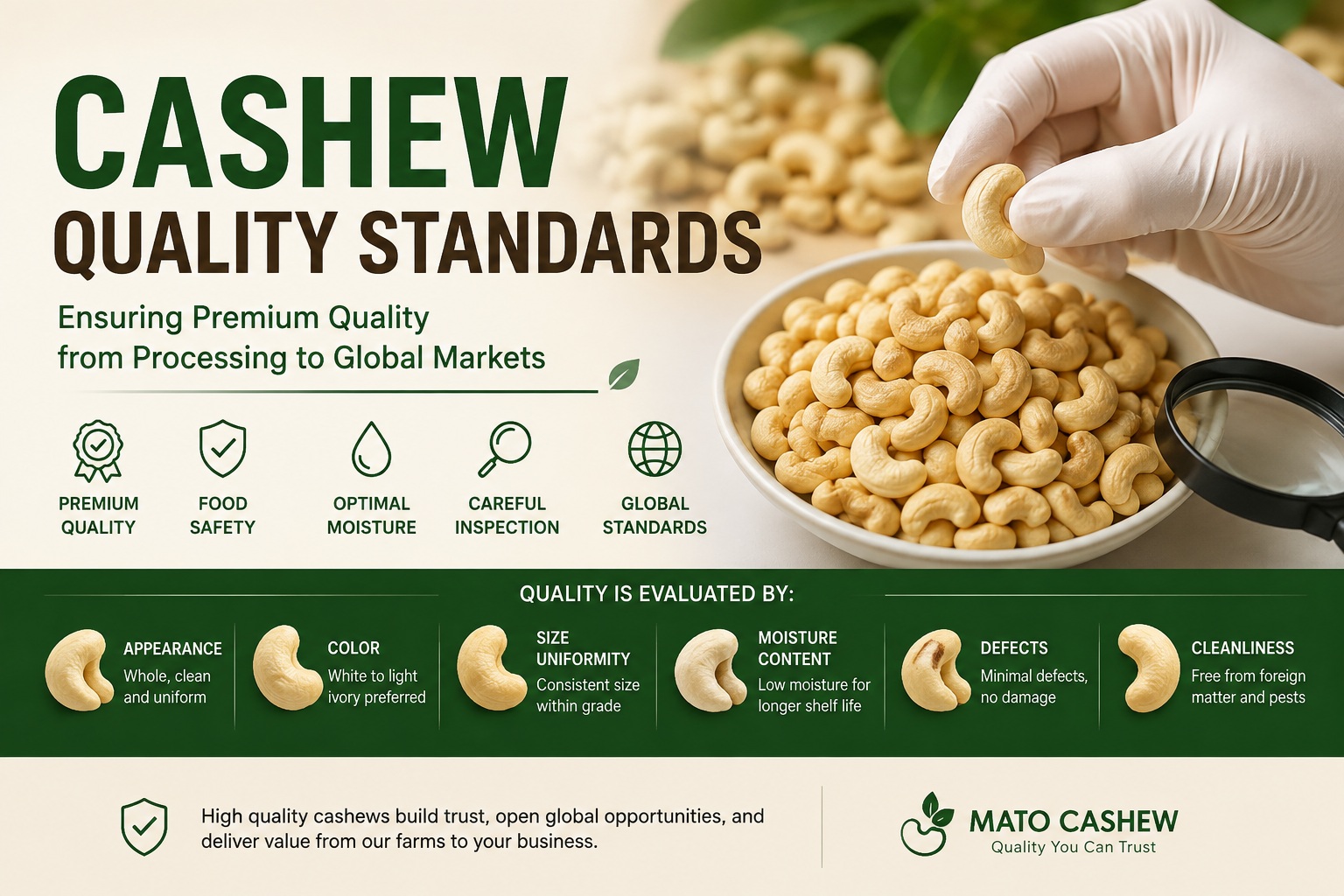
International buyers assess several important characteristics during quality inspection.
Appearance
Premium kernels should have a clean, natural appearance with minimal surface damage and a uniform shape.
Color
Kernel color should be consistent within the selected grade. Excessive discoloration may indicate processing problems or storage issues.
Size Uniformity
Kernels within the same package should have a consistent size according to the selected grade.
Moisture Content
Proper moisture helps maintain freshness, texture, and shelf life while reducing the risk of mold growth during storage.
Defects
Inspectors evaluate kernels for defects such as discoloration, insect damage, mold, broken pieces, and foreign materials.
Cleanliness
Finished products should be free from shells, dust, stones, metal fragments, insects, or other contaminants.
Quality Inspection
Professional quality inspection combines visual examination, physical measurements, and food safety controls to ensure that exported cashew kernels meet buyer specifications.
Common Quality Defects
During inspection, quality controllers carefully identify defects that may reduce product value or affect buyer acceptance.
| Defect | Description | Impact |
|---|---|---|
| Broken Kernels | Kernels damaged during processing | Lower commercial value |
| Discoloration | Abnormal kernel color | Reduced visual quality |
| Mold | Fungal contamination caused by excess moisture | Food safety risk |
| Foreign Matter | Shells, stones, dust, or other contaminants | Rejected during inspection |
| Insect Damage | Damage caused by insects before or after harvest | Reduced product quality |
Quality Control
Even a small number of serious defects can reduce buyer confidence and may lead to rejection of an export shipment.
Moisture Standards
Moisture content is one of the most important quality indicators for cashew kernels. Proper moisture helps preserve texture, flavor, and shelf life while reducing the risk of mold growth.
| Moisture Level | Typical Result |
|---|---|
| Too High | Higher risk of mold, spoilage, and reduced shelf life |
| Recommended Range | Supports product stability during storage and transportation |
| Too Low | Kernels may become brittle and more susceptible to breakage |
Storage Tip
Maintaining appropriate moisture throughout storage and transportation helps preserve product quality and extends shelf life.
Food Safety Requirements
In addition to physical quality, international buyers expect cashew kernels to meet food safety requirements.
Important food safety practices include:
- Maintaining hygienic processing facilities.
- Preventing cross-contamination.
- Using clean packaging materials.
- Controlling pests throughout storage.
- Following documented quality control procedures.
Food safety requirements complement grading and quality standards by ensuring that products are safe for consumers as well as visually appealing.
Quality Inspection Process
Quality inspection is performed throughout the production process to ensure that cashew kernels consistently meet buyer specifications and international standards.
The typical inspection process includes:
- Receiving raw kernels.
- Visual inspection for defects.
- Moisture testing.
- Sorting by quality and grade.
- Removal of defective kernels.
- Packaging under hygienic conditions.
- Final quality verification before shipment.
Continuous Quality Control
Quality inspection is not a single step. It is a continuous process performed throughout production to maintain consistency and reduce the risk of export rejection.
Cambodia Perspective
Cambodia has become one of the world’s fastest-growing cashew-producing countries. As the processing industry continues to expand, maintaining internationally recognized quality standards has become increasingly important.
High-quality processing practices help Cambodian producers:
- Increase export competitiveness.
- Build long-term relationships with international buyers.
- Reduce product losses.
- Improve brand reputation.
- Deliver consistent premium-quality cashew kernels.
For companies such as Mato Cashew, maintaining strict quality standards demonstrates a commitment to producing safe, reliable, and premium products for both domestic and international markets.
Key Takeaways
Understanding cashew quality standards helps buyers, processors, and consumers make informed decisions.
The most important points to remember are:
- Quality standards evaluate the overall condition of cashew kernels.
- Quality is different from grading.
- Moisture control is essential for maintaining shelf life.
- Food safety practices protect consumers and support export requirements.
- Continuous inspection helps ensure consistent product quality.
- Premium quality depends on more than kernel size alone.
Frequently Asked Questions
What is the difference between quality and grading?
Grading classifies kernels by size, color, and shape, while quality standards evaluate the overall condition, consistency, and safety of the product.
Why is moisture important?
Proper moisture helps preserve freshness, texture, and shelf life while reducing the risk of mold growth.
Can a premium grade still fail quality inspection?
Yes. Even premium grades may fail inspection if defects, contamination, or excessive moisture are present.
What are common quality defects?
Common defects include broken kernels, discoloration, mold, insect damage, and foreign matter.
Why is quality inspection important for export?
Consistent quality inspection helps ensure products meet buyer specifications and international market requirements.
Continue Learning
Cashew Grading Standards
Complete Guide to Cashew Processing
What Is Cashew?