What is Cashew?
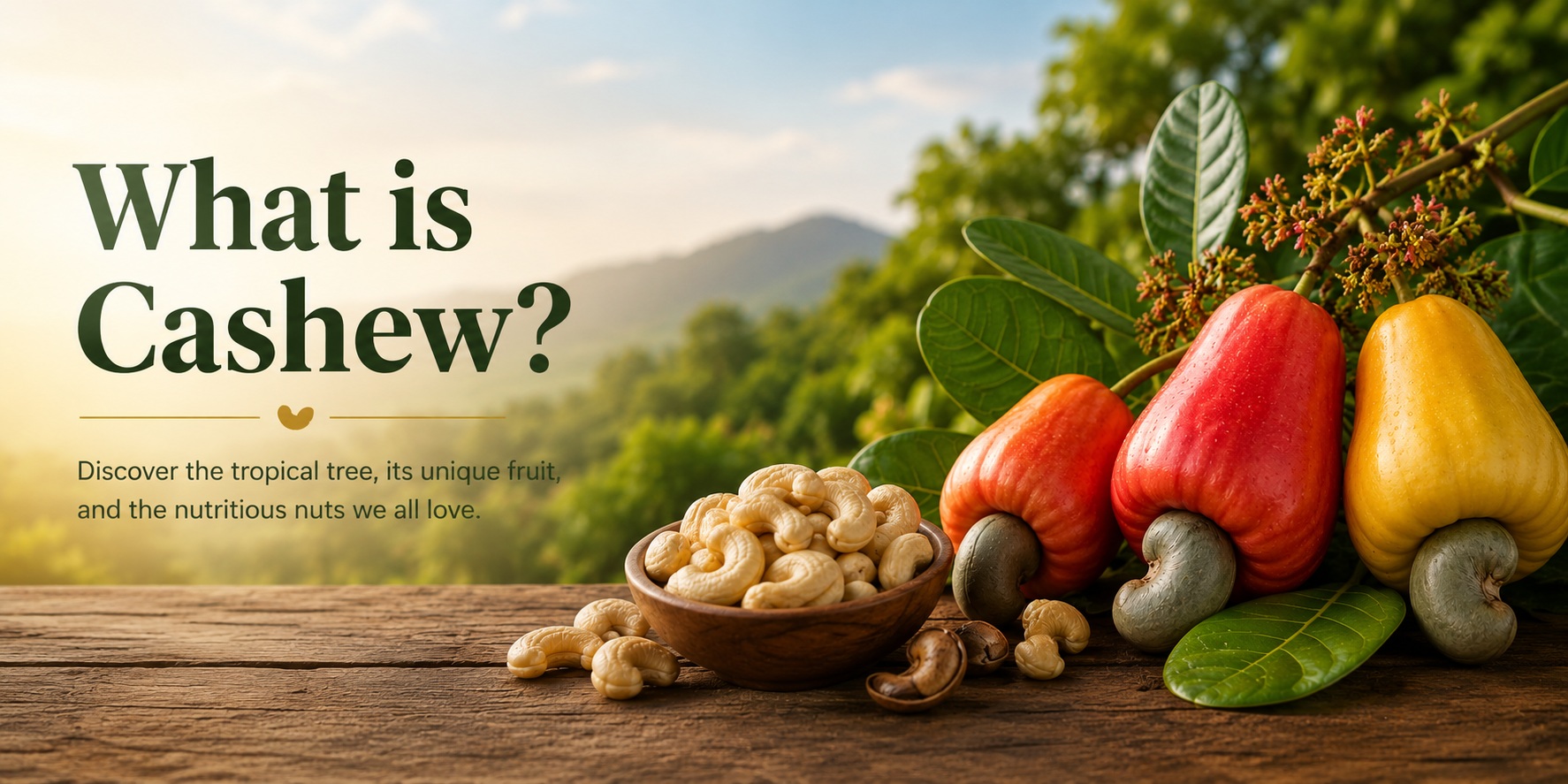
Cashew is a tropical evergreen tree scientifically known as Anacardium occidentale. It is cultivated for two valuable products: the cashew kernel, which is widely consumed as a nutritious food, and the cashew apple, a juicy fruit used in beverages, jams, and other food products.
Native to northeastern Brazil, the cashew tree has spread to many tropical regions around the world. Today, it is grown extensively in countries such as India, Vietnam, Côte d’Ivoire, Nigeria, Tanzania, and Cambodia. Favorable climate conditions and increasing investment in the sector have made Cambodia one of the world’s leading producers of raw cashew nuts.
For consumers, cashews are known as a delicious and nutrient-rich snack. For farmers and processors, they represent an important agricultural commodity with significant economic value. Understanding what a cashew is—from the tree and fruit to the edible kernel—provides a solid foundation for learning about cultivation, processing, grading, and international trade.
🌱 Did You Know?
Although commonly called a cashew nut, the edible part is botanically classified as a seed that develops inside a hard shell attached beneath the cashew apple.
Quick Facts
| Item | Information |
|---|---|
| Scientific Name | Anacardium occidentale |
| Plant Family | Anacardiaceae |
| Native Region | Northeastern Brazil |
| Tree Type | Tropical evergreen tree |
| Main Products | Cashew kernel and cashew apple |
| Major Producing Countries | Brazil, Vietnam, India, Côte d'Ivoire, Cambodia, Nigeria, Tanzania |
| Average Lifespan | 30–40 years |
Cambodia Insight
Cambodia has become one of the world’s leading producers of raw cashew nuts. The country is increasingly investing in domestic processing to create more value before export.
Why Are Cashews Important?
Learning about cashews helps consumers make informed food choices while giving farmers, processors, exporters, and students a better understanding of one of the world’s most valuable tree crops.
This guide introduces the essential facts about cashews and serves as the foundation for more advanced topics, including processing, grading standards, quality control, nutrition, and international trade.
Scientific Classification
The cashew tree belongs to the Anacardiaceae family, the same botanical family as mango (Mangifera indica) and pistachio (Pistacia vera). Its scientific name is Anacardium occidentale, a species native to northeastern Brazil that is now cultivated throughout tropical regions worldwide.
| Classification | Details |
|---|---|
| Kingdom | Plantae |
| Clade | Angiosperms |
| Clade | Eudicots |
| Order | Sapindales |
| Family | Anacardiaceae |
| Genus | Anacardium |
| Species | Anacardium occidentale |
💡 Interesting Fact
The botanical name Anacardium occidentale was first described by the Swedish botanist Carl Linnaeus in the 18th century. Today, it remains the internationally accepted scientific name for the cashew tree.
Origin and History
The cashew tree (Anacardium occidentale) is native to the tropical regions of northeastern Brazil. Indigenous communities cultivated and consumed cashews long before European explorers arrived in South America. The tree was valued not only for its edible kernel but also for its juicy cashew apple and its adaptability to warm climates.
During the sixteenth century, Portuguese traders introduced the cashew tree to parts of Africa and Asia as part of their maritime trade routes. Because the tree grows well in tropical environments with distinct wet and dry seasons, it spread rapidly across countries such as India, Mozambique, and later Southeast Asia.
Over time, cashews became an important commercial crop. Advances in cultivation, processing, and international trade transformed the cashew industry into a significant contributor to rural livelihoods and global food markets.
🌍 Global Perspective
Today, cashews are cultivated across tropical regions in Africa, Asia, and South America. Countries including Vietnam, India, Côte d’Ivoire, Brazil, and Cambodia play important roles in the global cashew supply chain.
Cambodia Insight
Cashew cultivation expanded rapidly in Cambodia during the past two decades. Provinces such as Kampong Thom, Kratie, Ratanakiri, Mondulkiri, and Kampong Cham have become important production areas, contributing to Cambodia’s position as one of the world’s leading producers of raw cashew nuts.
The Cashew Tree
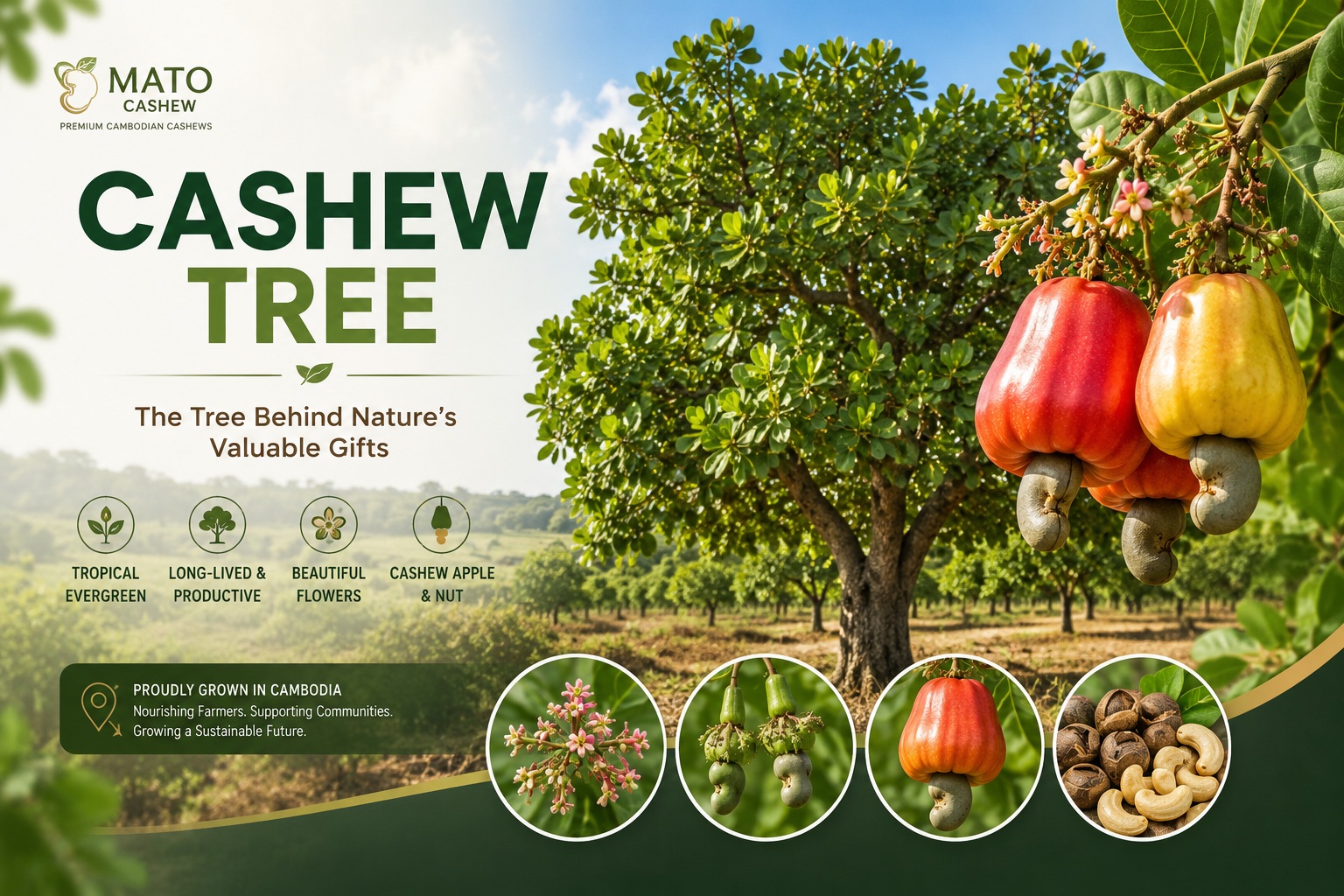
The cashew tree is a tropical evergreen species that thrives in warm climates with well-drained soil and abundant sunlight. Under favorable growing conditions, a mature tree typically reaches between 6 and 12 meters (20–40 feet) in height, although some older trees can grow even larger.
The tree develops a broad, spreading canopy that provides shade while helping protect the soil from excessive heat. Its thick branches and extensive root system make the tree relatively tolerant of drought once established, making it well suited to many tropical regions.
Cashew leaves are simple, oval-shaped, and leathery with a glossy green surface. Young leaves often appear reddish before gradually turning dark green as they mature. During the flowering season, the tree produces clusters of small, fragrant flowers that range in color from pale green to pink.
Not every flower develops into a fruit. Successful pollination results in the formation of the cashew apple, while the true fruit—the cashew nut—grows beneath it inside a hard protective shell.
🌳 Tree Characteristics
A healthy cashew tree can remain productive for several decades when properly managed. Good pruning, soil management, and pest control all contribute to long-term productivity.
| Characteristic | Description |
|---|---|
| Scientific Name | Anacardium occidentale |
| Plant Type | Tropical evergreen tree |
| Typical Height | 6–12 meters (20–40 feet) |
| Climate | Warm tropical and subtropical regions |
| Preferred Soil | Well-drained sandy or loamy soil |
| Flowering Season | Varies by region and climate |
| Economic Products | Cashew kernel and cashew apple |
The Cashew Apple
One of the most fascinating features of the cashew tree is the cashew apple. Although it looks like a fruit, it is technically a swollen stem, often referred to as a false fruit or accessory fruit. The true botanical fruit is the hard shell that develops beneath the cashew apple and contains the edible cashew kernel.
The cashew apple is usually yellow, orange, or bright red when ripe. It has a sweet aroma and a juicy texture with a slightly astringent taste caused by naturally occurring tannins. Because it bruises easily and has a short shelf life, fresh cashew apples are rarely traded internationally.
Despite this limitation, the cashew apple is highly nutritious. It contains vitamin C, natural sugars, antioxidants, and dietary fiber. In many producing countries, it is processed into juices, jams, candies, syrups, vinegar, and even fermented beverages, helping farmers generate additional value from the crop.
💡 Did You Know?
A single cashew apple produces only one cashew nut. Unlike many other fruits that contain multiple seeds, each cashew apple develops a single seed enclosed within the hard shell attached to its base.
| Feature | Description |
|---|---|
| Botanical Type | Accessory (false) fruit |
| Color | Yellow, orange, or red when ripe |
| Taste | Sweet with slight astringency |
| Main Nutrients | Vitamin C, antioxidants, fiber |
| Shelf Life | Very short after harvest |
| Common Uses | Juice, jam, syrup, vinegar, fermented beverages |
The Cashew Kernel
The cashew kernel is the edible seed found inside the hard shell of the cashew fruit. It is the most valuable commercial product of the cashew tree and is widely consumed around the world as a snack, cooking ingredient, and food processing material.
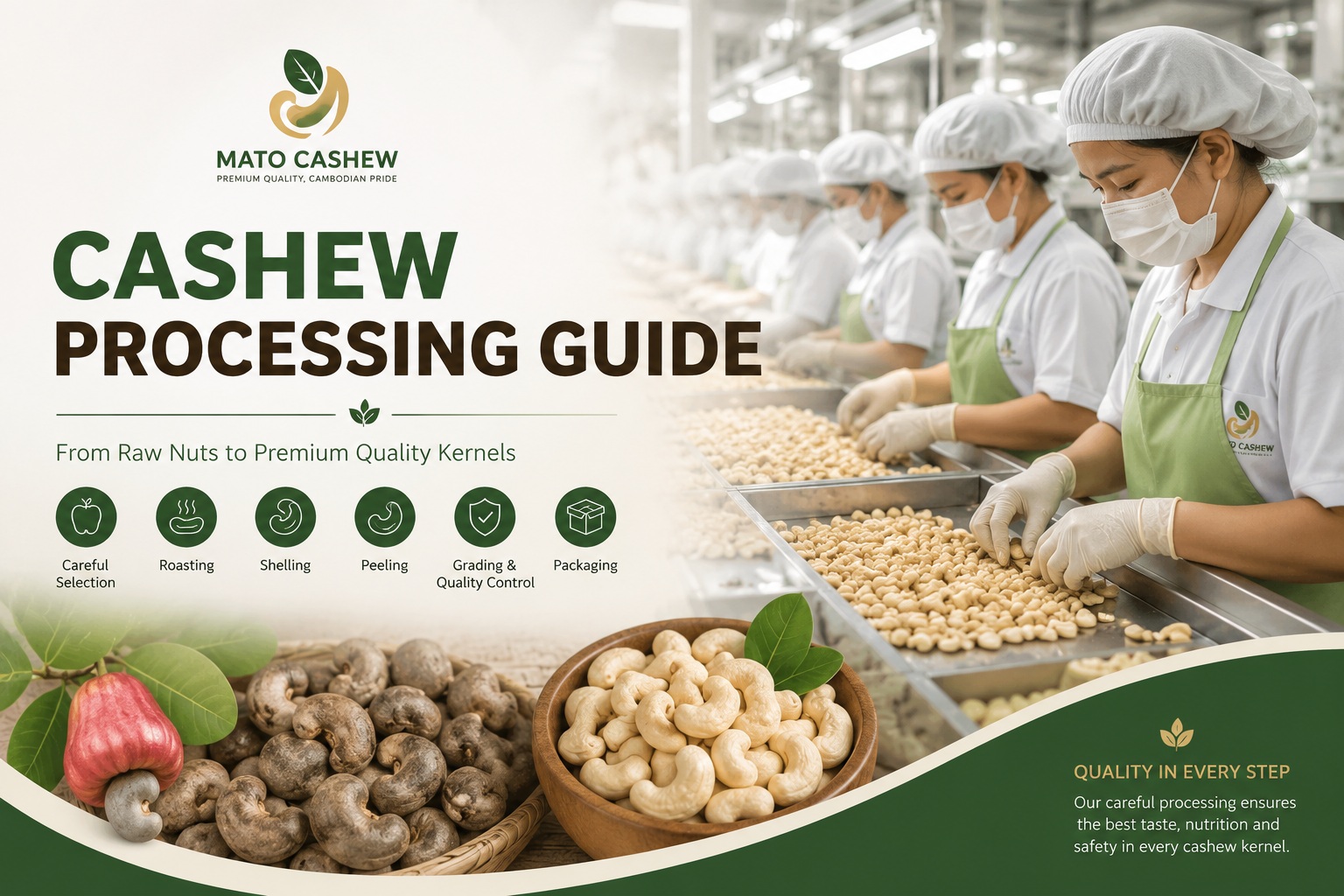
Before reaching consumers, the kernel must go through several processing stages. After harvesting, the nuts are dried, roasted or steamed, carefully shelled, peeled, graded, and packed. Each step requires precision to preserve the kernel’s quality, appearance, and food safety.
The shell surrounding the kernel contains Cashew Nut Shell Liquid (CNSL), a naturally occurring oil that can irritate human skin. For this reason, raw cashew nuts should never be opened by hand without proper processing. Modern processing facilities use specialized equipment and trained workers to safely remove the shell while protecting the edible kernel.
High-quality kernels are evaluated according to internationally recognized grading standards. Factors such as size, color, shape, moisture content, and the presence of defects determine their commercial value in domestic and export markets.
⚠️ Safety Note
Raw cashew nuts are protected by a hard shell containing Cashew Nut Shell Liquid (CNSL). Industrial processing removes the shell safely before the edible kernel reaches consumers.
| Processing Stage | Purpose |
|---|---|
| Drying | Reduce moisture for safe storage |
| Roasting or Steaming | Prepare shells for easier removal |
| Shelling | Separate the shell from the kernel |
| Peeling | Remove the thin testa (skin) |
| Grading | Classify kernels by size and quality |
| Packing | Protect freshness during storage and export |
Nutritional Value
Cashew kernels are widely recognized as a nutrient-dense food, meaning they provide a high concentration of essential nutrients relative to their serving size. They contain a balanced combination of healthy fats, plant-based protein, carbohydrates, dietary fiber, vitamins, and minerals that contribute to a nutritious diet.
The majority of the fat found in cashews consists of unsaturated fats, which are generally considered more heart-friendly than saturated fats when consumed as part of a balanced diet. Cashews also provide plant protein, making them a valuable food for people seeking a variety of protein sources.
In addition to macronutrients, cashews are naturally rich in several important micronutrients, including magnesium, copper, manganese, phosphorus, zinc, and iron. These nutrients play important roles in energy metabolism, bone health, immune function, and normal cellular processes.
Like many nutrient-rich foods, cashews are best enjoyed as part of a varied and balanced diet rather than as a single source of nutrition.
| Nutrient | Why It Matters |
|---|---|
| Healthy Unsaturated Fats | Support overall heart health as part of a balanced diet |
| Protein | Helps build and maintain body tissues |
| Dietary Fiber | Supports normal digestive function |
| Magnesium | Contributes to muscle and nerve function |
| Copper | Supports energy production and connective tissue formation |
| Iron | Helps transport oxygen throughout the body |
| Zinc | Supports normal immune function |
🥜 Nutrition Tip
Cashews are naturally nutrient-rich, but they are also energy-dense. Enjoying moderate portions as part of a balanced diet is generally recommended.
Health Benefits
Thanks to their rich nutritional profile, cashew kernels can be part of a healthy and balanced diet. While no single food can provide every nutrient the body needs, cashews offer a combination of healthy fats, plant protein, vitamins, and minerals that support normal body functions.
Heart Health
Cashews contain predominantly unsaturated fats, which can help support heart health when they replace foods high in saturated fat as part of an overall balanced eating pattern.
Energy Production
Minerals such as copper, magnesium, and iron contribute to normal energy metabolism. These nutrients help the body convert food into usable energy for everyday activities.
Bone and Muscle Function
Cashews provide magnesium and phosphorus, two minerals that play important roles in maintaining healthy bones and supporting normal muscle function.
Immune Support
Zinc and copper contribute to the normal function of the immune system. Eating a varied diet that includes nutrient-rich foods such as cashews can help meet daily nutritional requirements.
Antioxidant Protection
Cashews naturally contain antioxidant compounds that help protect cells from oxidative stress. These compounds work together with vitamins and minerals found in many fruits, vegetables, and nuts.
🥗 Healthy Eating Tip
For the greatest nutritional benefit, enjoy unsalted or lightly roasted cashews as part of a balanced diet that includes fruits, vegetables, whole grains, and other nutritious foods.
| Nutrient | Supports |
|---|---|
| Healthy Unsaturated Fats | Heart health |
| Protein | Growth and tissue maintenance |
| Magnesium | Muscle and nerve function |
| Phosphorus | Bone health |
| Iron | Oxygen transport |
| Copper | Energy metabolism |
| Zinc | Normal immune function |
Cambodia Perspective
Cambodia has emerged as one of the world’s leading producers of raw cashew nuts, thanks to its favorable tropical climate, expanding cultivation areas, and growing expertise among local farmers. Cashew farming has become an important source of income for many rural communities and plays a meaningful role in the country’s agricultural economy.
Major cashew-producing provinces include Kampong Thom, Kratie, Kampong Cham, Ratanakiri, Mondulkiri, and Preah Vihear. These regions provide suitable soil conditions and seasonal rainfall that support healthy tree growth and high-quality nut production.
In recent years, Cambodia has placed increasing emphasis on developing its domestic cashew processing industry. Instead of exporting only raw cashew nuts, local businesses are investing in processing facilities that produce value-added products such as premium cashew kernels for international markets.
This transition creates opportunities to strengthen local industries, generate employment, improve product quality, and increase export value. As processing capacity continues to grow, Cambodia is well positioned to become not only a major producer of raw cashew nuts but also a recognized supplier of high-quality processed cashew products.
Cambodia Insight
Expanding domestic processing allows more of the value created from Cambodia’s cashew harvest to remain within the country, benefiting farmers, processors, businesses, and local communities.
| Strength | Why It Matters |
|---|---|
| Favorable Climate | Supports consistent cashew production |
| Large Cultivation Areas | Provides strong production capacity |
| Growing Processing Industry | Creates higher-value export products |
| Experienced Farmers | Contribute to quality raw materials |
| Export Potential | Expands access to international markets |
Key Takeaways
- The cashew tree (Anacardium occidentale) is a tropical evergreen species native to northeastern Brazil.
- A cashew tree produces two valuable products: the cashew kernel and the cashew apple.
- The edible kernel develops inside a hard shell that requires careful processing before it is safe for consumption.
- Cashews are naturally rich in healthy fats, plant protein, vitamins, and essential minerals that contribute to a balanced diet.
- Cambodia has become one of the world’s leading producers of raw cashew nuts and is expanding its domestic processing industry to create higher-value products.
Frequently Asked Questions
Is a cashew a nut or a seed?
Botanically, the edible cashew kernel is a seed that develops inside the true fruit of the cashew tree. It is commonly referred to as a nut in culinary use.
Can you eat raw cashew nuts directly from the tree?
No. The shell contains Cashew Nut Shell Liquid (CNSL), which can irritate the skin. Cashews must be properly processed before they are safe to eat.
What is the cashew apple?
The cashew apple is a swollen stem, also called an accessory fruit, that develops above the true fruit containing the cashew seed.
Why is Cambodia important in the cashew industry?
Cambodia is one of the world's leading producers of raw cashew nuts and continues to invest in domestic processing to increase product value and export opportunities.
Are cashews nutritious?
Yes. Cashews provide healthy unsaturated fats, plant protein, dietary fiber, vitamins, and essential minerals when consumed as part of a balanced diet.