A cashew tree can produce many flowers without developing the same number of nuts. Successful production depends on the transfer of suitable pollen, the condition of the tree, weather, and the survival of developing fruit. This guide explains why flower-visiting insects matter and how farmers can manage orchards in ways that support pollination while still addressing pests and diseases.
Quick Facts
- ✓Cashew flower clusters contain male and bisexual flowers; only bisexual flowers can develop fruit.
- ✓Bees and other insects can transfer pollen, but a flower visit does not always mean effective pollination.
- ✓Weather, tree health, and natural fruit abortion also influence the number of nuts harvested.
- ✓Protecting pollinators is compatible with carefully planned integrated pest management.
- ✓Record flower visits and fruit set before attributing changes in yield to a single practice.
1. Why Flowering and Fruit Set Are Different
Flowering is the appearance of blossoms; fruit set begins when a successfully fertilized flower develops into a young fruit. Not every cashew flower is capable of setting fruit, and not every fertilized flower survives to harvest. Farmers should therefore evaluate orchard performance using developing nuts and eventual yield, rather than flower numbers alone. A poor crop after heavy flowering may reflect several interacting causes, not simply a shortage of bees.
2. Understanding Cashew Flowers
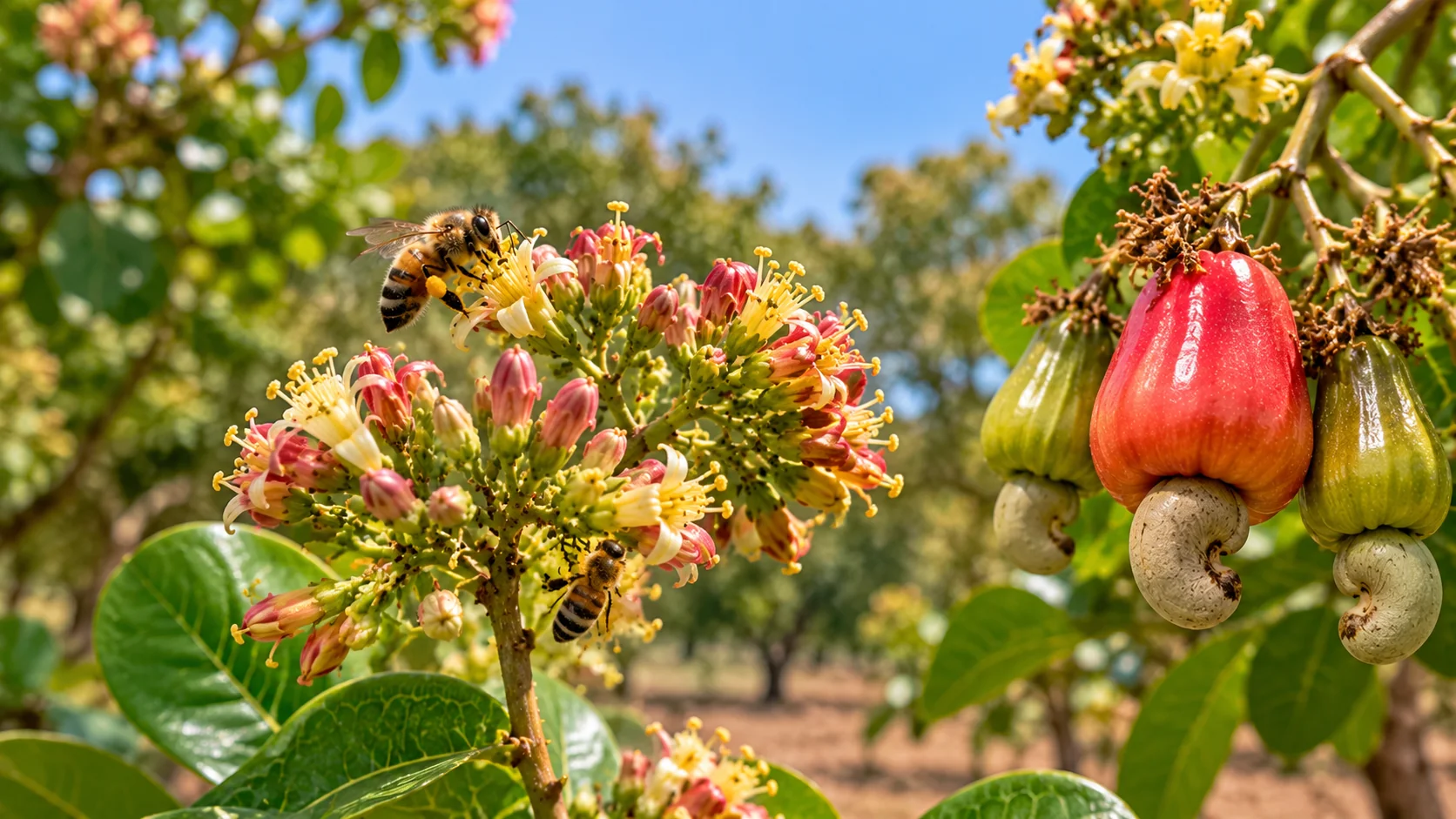
Cashew (Anacardium occidentale) bears small flowers in branched clusters called panicles. A panicle generally contains male (staminate) and bisexual (hermaphroditic) flowers. Male flowers supply pollen; bisexual flowers contain the reproductive structures needed for fruit development. Insect movement among flowers can carry pollen to receptive stigmas. The effectiveness of this transfer depends on the flower, pollen compatibility, and the insect’s behavior. The familiar fleshy cashew apple develops from the swollen stalk, while the attached nut is the true botanical fruit.
3. Beneficial Pollinating Insects
Bees are important visitors to cashew flowers, and other insects may also visit them. However, a visitor is not automatically an effective pollinator: an insect must contact the relevant flower parts and transfer viable pollen. Different insects may vary in their effectiveness, and the important species can differ by region. Avoid assuming that adding honeybee hives will always solve low fruit set. Protecting a diversity of locally occurring flower visitors and observing what happens in the orchard are sensible starting points.
A study of cashew orchards in India published in Agriculture, Ecosystems & Environment in 2026 found higher abundance and diversity of flower-visiting insects under agroecological management. Nut yields showed a positive tendency but varied considerably, so the study did not establish a guaranteed yield increase for every orchard or for Cambodia.
4. Factors Affecting Fruit Set
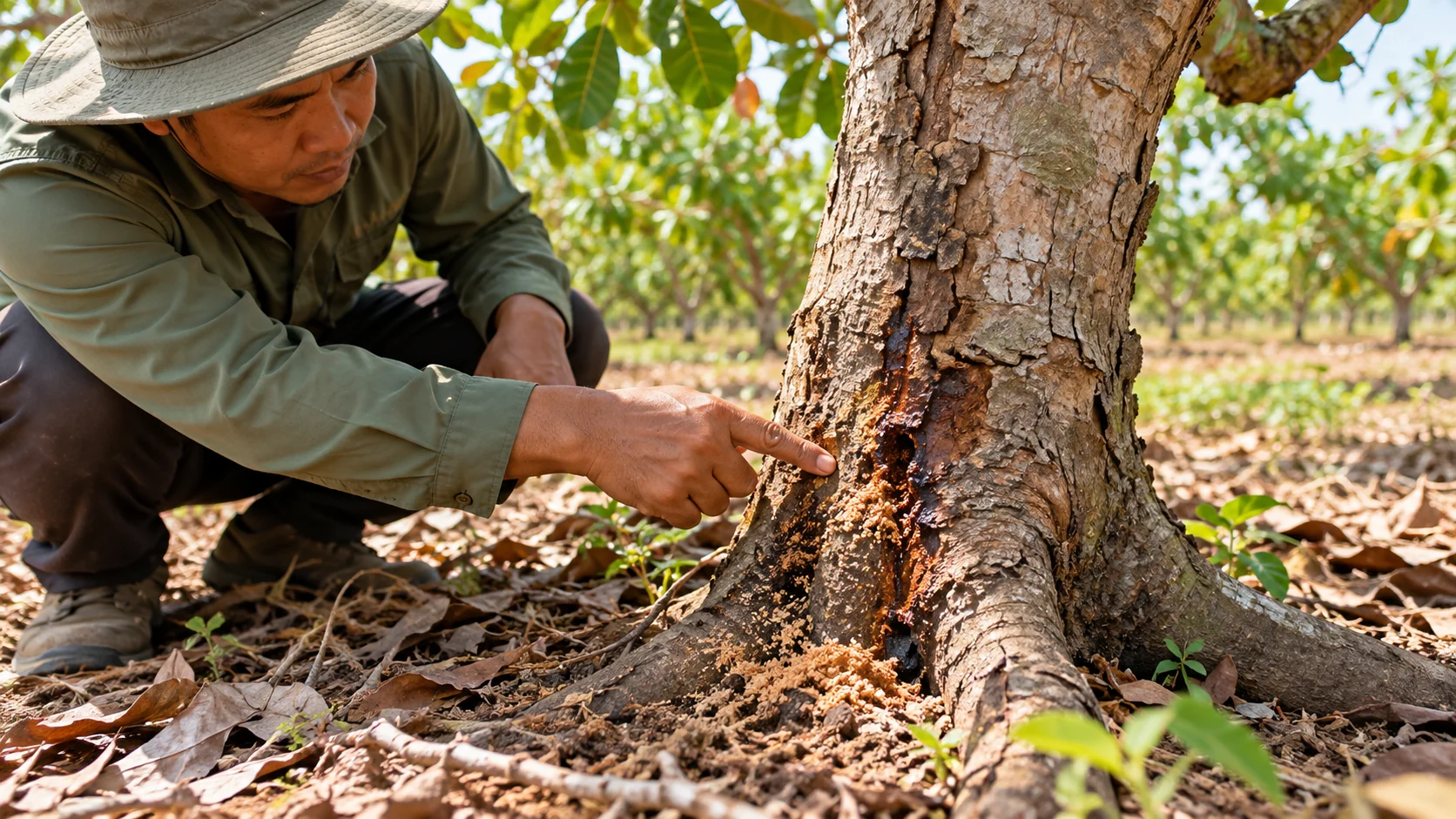
Pollination is only one part of successful fruit development. Heavy rain, strong wind, or unfavorable conditions during flowering can affect insect activity and flower survival. Poor tree vigor, moisture stress, nutrient imbalance, pest and disease damage, and the natural shedding of young fruit can also reduce the harvest. Pollen availability and compatibility may matter as well. When fruit set is low, assess these factors together rather than choosing a single explanation without evidence.
5. Pollinator-Friendly Orchard Management
Maintain suitable flowering plants and habitat around orchard edges where they do not create unacceptable competition or pest problems. Preserve useful vegetation, nesting opportunities, and natural areas when practical. Avoid unnecessary removal of all flowering groundcover, especially when it supplies food outside the cashew flowering period. At the same time, manage weeds and competing plants to protect young trees, water availability, and access for orchard work. The aim is a balanced, locally appropriate habitat, not uncontrolled vegetation.
6. Safe Pest Management During Flowering
Use integrated pest management (IPM): inspect the orchard, identify the actual pest, assess damage, and prioritize suitable cultural, mechanical, or biological options before chemical intervention. Avoid unnecessary insecticide applications while flowers are attracting pollinators. If treatment is necessary, follow Cambodian registration requirements and the product label, including crop approval, dose, timing, protective equipment, and pollinator precautions. Spraying in the evening is not automatically safe: some products remain hazardous after application. Seek locally qualified agricultural advice where the risk is unclear.
7. Practical Field Monitoring
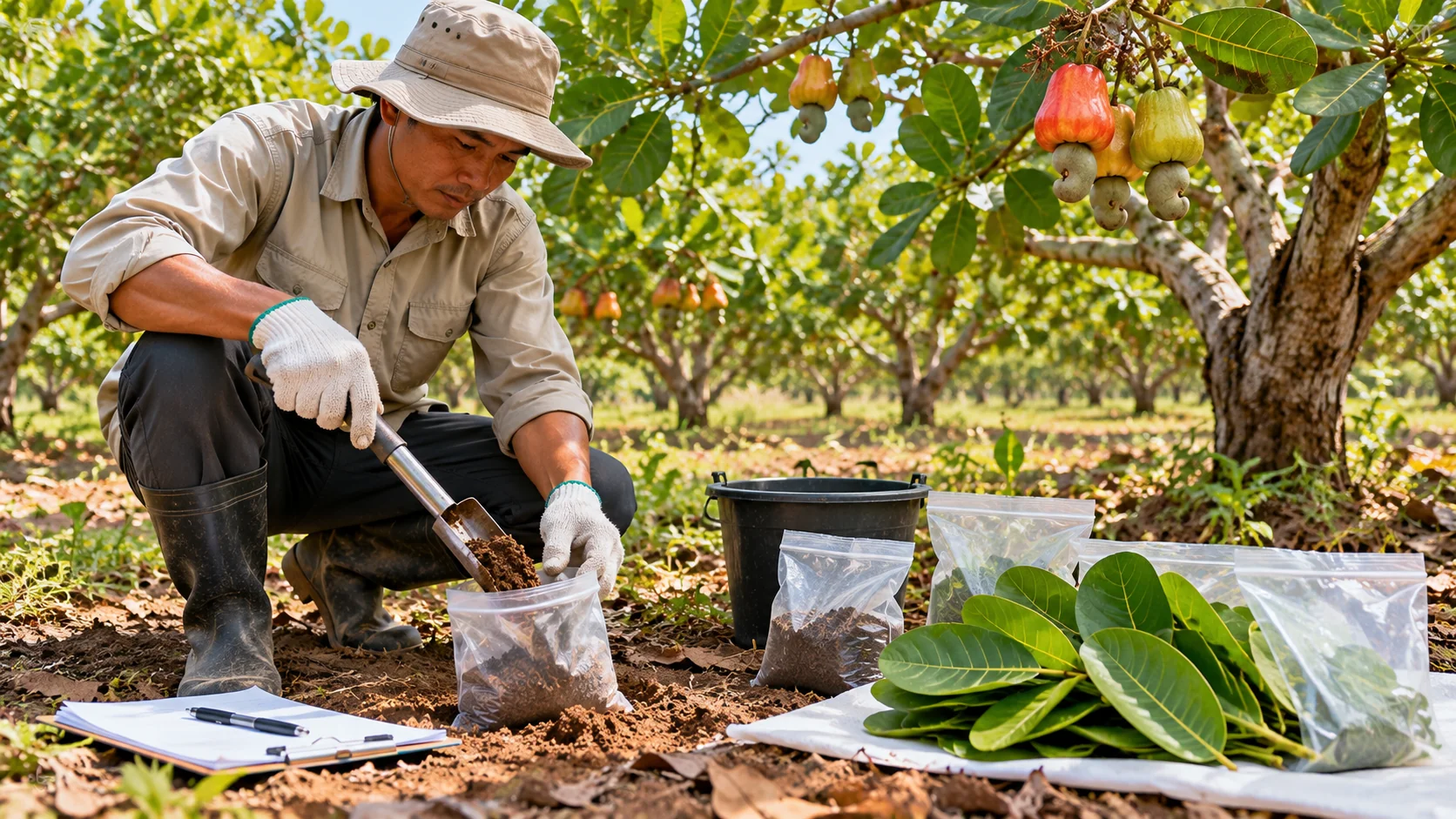
Choose several representative trees across the orchard, including different locations and tree conditions. Mark comparable flowering panicles and observe them at consistent times on several days. Record the date, weather, number and general types of insect visits, visible flower damage, and later development of young nuts. Continue observing until the survival of developing fruit can be assessed. Compare records between seasons and management areas where possible. These observations can reveal patterns, but correlation alone does not prove that a particular insect or practice caused a yield change.
8. Application for Cambodian Cashew Farmers
For Cambodian growers, a useful first step is to combine simple flower monitoring with careful pest scouting and protection of beneficial insects. Keep notes on flowering dates, rainfall, orchard treatments, young nut survival, and final harvest. Discuss unusual losses with a local extension officer or qualified agronomist. Start with low-cost changes that can be evaluated over time; do not transfer yield percentages from studies in India or West Africa directly to Cambodian farms. Results depend on local weather, varieties, landscape, and management.
Conclusion
Protecting flower-visiting insects can support an important stage of cashew production, but good pollination alone does not guarantee a high harvest. The strongest approach combines pollinator-friendly habitat, responsible pest management, healthy trees, and consistent field records. Farmers can then judge which practices are genuinely useful in their own orchards.
References
- Agroecological cashew cultivation increases pollinator abundance, diversity and flower visitation rates, with potential yield benefits. (2026). Agriculture, Ecosystems & Environment, 396, 110006. https://doi.org/10.1016/j.agee.2025.110006
- Food and Agriculture Organization of the United Nations (FAO). How to manage pollination. https://www.fao.org/agriculture/crops/thematic-sitemap/theme/spi/scpi-home/managing-ecosystems/pollination-management/pm-how/en/
- FAO. Integrated Pest Management (IPM). https://www.fao.org/pest-and-pesticide-management/ipm/integrated-pest-management/en
- FAO. Beekeeping and sustainable livelihoods: Bees are diligent pollinators of fruit and seed crops. https://www.fao.org/4/y5110e/y5110e03.htm